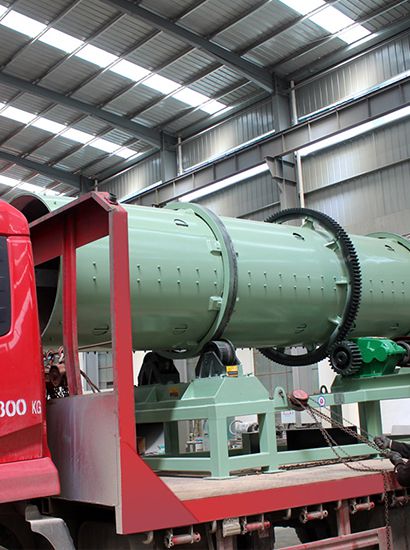
In an organic fertilizer production line, compost turning and disc granulation—though seemingly independent—are inextricably linked. If the turning process is inadequate, the subsequent granulation will lack a proper foundation; conversely, if the granulation setup is incorrect, the effort invested in turning the material goes to waste.
The primary objective of the turning stage is to transform raw materials into a state “ideal for disc granulation.” Once livestock manure is mixed with bulking agents, the pile must be turned periodically to facilitate oxygen supply, temperature regulation, and moisture evaporation. A trough-type compost turning machine operates back and forth within a trough or along windrows, turning compacted material from the bottom to the surface while moving drier surface material into the interior, thereby facilitating the uniform proliferation of microorganisms. This process continues for 20 to 30 days, until the material darkens in color, odors dissipate, and the temperature stabilizes. The material’s moisture content (ideally around 30%), fiber length, and the absence of hard clumps at this stage directly determine the efficiency of the disc granulation process.
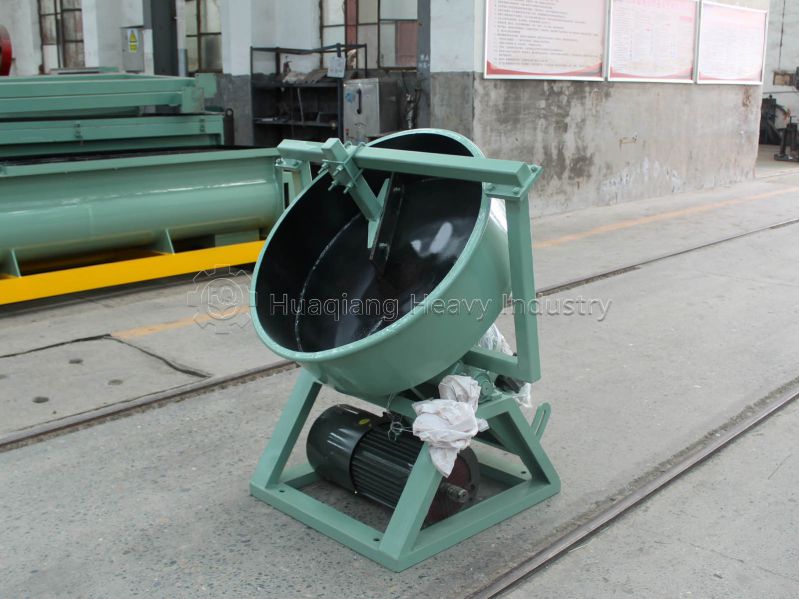
Disc granulation serves as a “quality check” for the material prepared during the turning phase. As powdered material enters a tilted, rotating disc, it rolls into small pellets, driven by friction against the disc surface and the inherent adhesiveness of the material. The disc is highly sensitive to the incoming feed: if the moisture is too high, the material sticks to the disc and forms a paste; if it is too low, the fine powder fails to pelletize, leading to a surge in “recycled” (unprocessed) material. Furthermore, if fibers are too long, they tangle into fibrous clumps along the disc edge, forcing a production stoppage. Consequently, after the turning stage, the material typically undergoes screening and a brief period of maturation to stabilize its moisture content and particle size before being fed into the granulator.
The transition between these two stages is often overlooked. If material from the turner is simply piled on the ground, moisture will redistribute—leaving the surface dry and the bottom wet—which causes inconsistent moisture levels during granulation. A better approach is to use a conveyor system to move the material directly into a buffer silo, where it can rest and homogenize before being metered into the granulator. Additionally, the disc’s rotational speed and tilt angle should be fine-tuned based on the specific condition of the incoming material, rather than relying on a fixed set of parameters.
Ultimately, the turning stage governs the “nature” of the material, while the disc granulation stage determines the “form” of the final granules. Turning the material ensures it becomes uniform and stable; only then can the disc granulator transform this stable state into smooth, rounded granules.