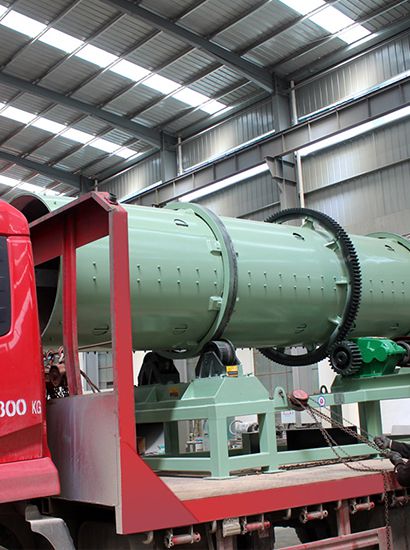
The terms “agricultural compost turner machine” and “livestock manure compost turner machine” are often used interchangeably, as if they were merely different names for the same type of equipment. However, when it comes to selecting the right machinery, it becomes clear that they are designed for entirely different materials. The distinction lies not in the name, but in “what is being turned.”
The physical form of the material dictates the design of the mixing rotor. Livestock manure compost turner machines—used for chicken, pig, or cattle manure—must handle high moisture content, high viscosity, or significant fiber content; the primary focus here is preventing material from sticking or tangling, and breaking up clumps. Agricultural compost turner machines, by contrast, typically handle agricultural waste such as crop stalks, mushroom substrate residues, vegetable scraps, or rice husks—materials characterized by long fibers, low density, and diverse composition. The core challenges here are preventing entanglement and ensuring uniform mixing. Consequently, agricultural waste compost turner machines often employ dual-shaft shearing rotors that cut long fibers before turning and aerating the material. Livestock manure equipment, meanwhile, emphasizes self-cleaning “broken-tooth” designs or chain-plate push mechanisms to prevent wet material from caking onto the shaft.
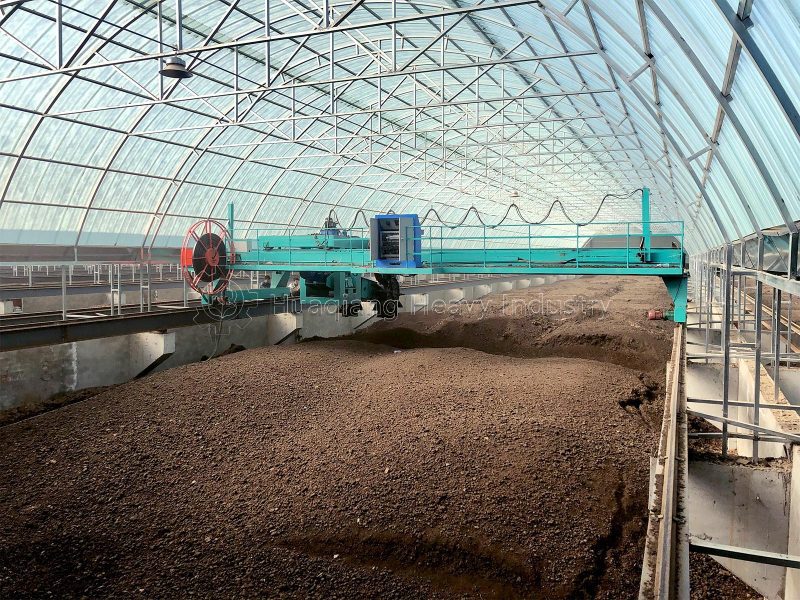
Requirements for mobility and corrosion resistance also differ. Livestock manure sites often feature high levels of leachate and ammonia, necessitating enhanced corrosion-resistant sealing and anti-slip tracks. Agricultural waste sites are generally drier, but the material is often loose and prone to collapse; the propulsion system must be designed to prevent slippage or “spinning in place,” and the rotors must be durable enough to withstand abrasion from siliceous particles.
The operational objectives also diverge. For livestock manure, the focus is on “control”—managing oxygen levels, temperature, and odors to prevent anaerobic acidification. For agricultural waste, the focus is on “adjustment”—balancing the carbon-to-nitrogen ratio, moisture content, and porosity, while forcibly blending materials of varying densities. The former prioritizes process stability, while the latter aims for a homogeneous substrate.
Therefore, these two types of equipment are not interchangeable simply by swapping out a blade. If you use a livestock manure compost turner machine on crop stalks, the fibers will tangle and seize the rotor shaft; conversely, if you use an agricultural compost turner machine on chicken manure, the wet, sticky waste will clog the shearing rotors. When selecting equipment, clarifying “what material is being turned” is more important than getting hung up on what the equipment is called.