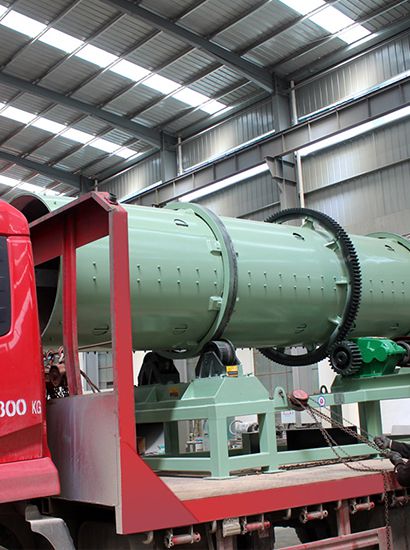
Organic waste—such as livestock and poultry manure, sludge, mushroom substrate residue, and high-fiber straw—often presents challenges during composting, including excessive moisture, material clumping, poor aeration, and uneven fermentation. When selecting a organic fertilizer compost turning machine for these types of feedstocks, one should not make a blind choice; instead, the equipment should be configured based on the specific state of the materials and actual production requirements.
- Select turning capacity based on material moisture content
For waste with high moisture content and high viscosity, it is advisable to first add bulking agents—such as straw or rice husks—to adjust moisture levels and improve aeration. Subsequently, a more powerful compost turner should be employed to prevent the material from sticking to the equipment or forming large, dense clumps. For feedstocks with high fiber content, choose equipment with strong turning/mixing capabilities that is resistant to material entanglement.
- Determine equipment type based on the composting site
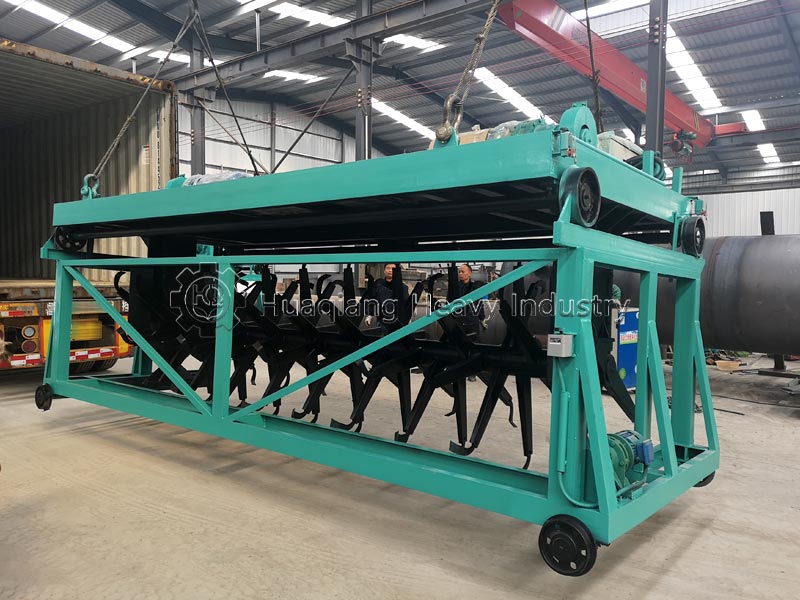
If a fixed fermentation tank (trough) system is used, a trough-type compost turning machine is ideal, as it allows for precise control over turning depth and operational paths. For open-air windrow composting, wheel-type or crawler-type compost turning machines offer greater flexibility and are better suited for handling large volumes of material.
- Schedule turning operations based on fermentation status
During the initial stages of composting, focus on the temperature rise and internal aeration of the material. If localized overheating, noticeable odors, or material clumping occur, inspect the pile and adjust the turning frequency accordingly. After turning, monitor temperature changes to avoid excessive turning, which could lead to the unnecessary loss of heat and moisture.
- Prioritize processing capacity and equipment maintenance
When purchasing, determine the appropriate equipment specifications based on daily input volume, as well as the width and depth of the compost piles, while ensuring some excess processing capacity. Additionally, evaluate the wear resistance of components such as the cutter shaft, mixing tines, and drive mechanisms to minimize maintenance costs during long-term operation.
Only by integrating feedstock pre-treatment, appropriate turning equipment, and effective fermentation management can one successfully address the challenges of composting difficult organic waste, thereby improving decomposition efficiency and the quality of the final organic fertilizer.