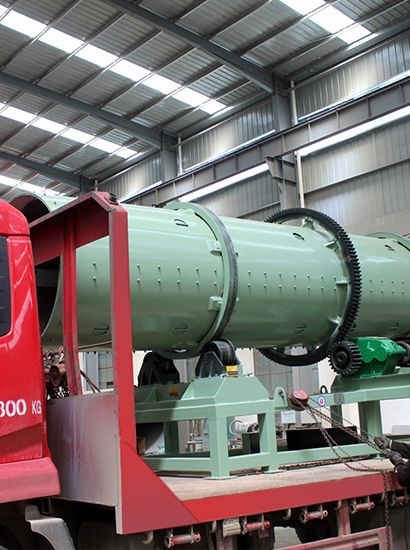
Well-composted cow dung is a high-quality organic fertilizer, but its loose form makes it inconvenient for storage, transportation, and application. Disc granulation technology is highly adaptable and easy to operate, making it the preferred granulation method.
Pretreatment is key to granulation: Thoroughly composted cow dung is pulverized, removing lumps and coarse fibers to prevent material blockage; moisture content is adjusted to 50%-60%, and a small amount of bentonite or other conditioners is added to increase material viscosity, laying the foundation for granulation.
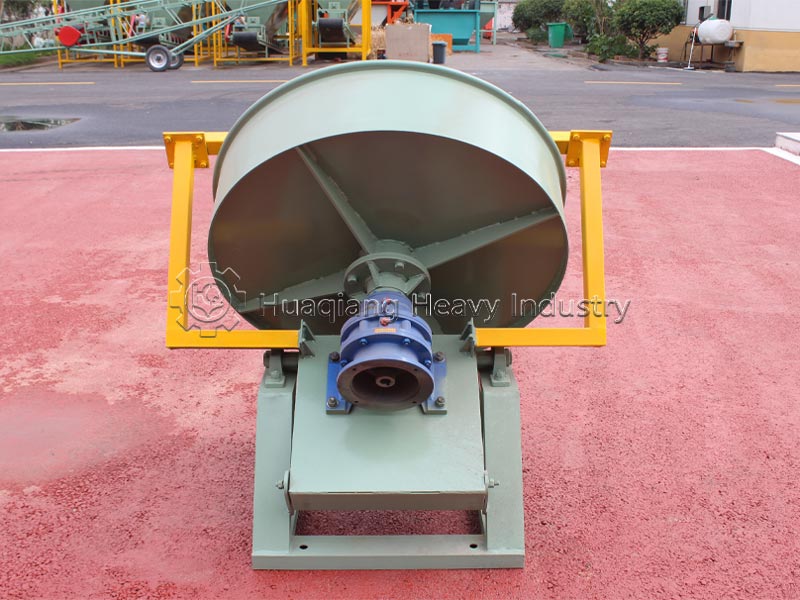
The core granulation process is efficient and convenient: The pretreated material is fed uniformly into the disc granulator. Using the centrifugal force and friction of the rotating disc, the material continuously tumbles and binds, gradually forming round and uniform granules. The granule size can be controlled by adjusting the disc’s tilt angle and rotation speed.
Subsequent processing is simple and easy: the formed granules are exported and allowed to air dry naturally or at low temperature to reduce moisture and increase strength. Then, unqualified fragments are removed by screening, and the fragments are returned to the granulator for secondary processing, reducing raw material loss.
In practice, it is important to note that the cow dung compost must be thoroughly decomposed; otherwise, the granulation effect will be affected. The entire disc granulation process is simple, energy-efficient, and perfectly suited to the characteristics of cow manure compost, achieving its efficient resource utilization.