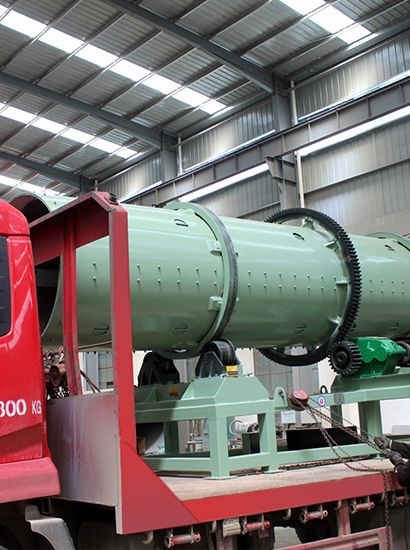
A complete NPK fertilizer production line consists of a series of interconnected stages: crushing, proportioning, mixing, granulating, drying, cooling, screening, coating, and packaging. Among these, the mixing stage directly determines the nutrient uniformity of the final granules, and the double shaft paddle mixer serves as the core piece of equipment in this process.
Unlike single-shaft ribbon mixers, the double shaft paddle mixer features two parallel shafts rotating in opposite directions, creating intense shear and convection within the overlapping zones of the paddles. This forced mixing method allows materials with significant density differences—such as urea, monoammonium phosphate (MAP), potassium chloride (MOP), fillers, and secondary or trace elements—to be blended thoroughly in a short time, maintaining a coefficient of variation for uniformity consistently below 5%.
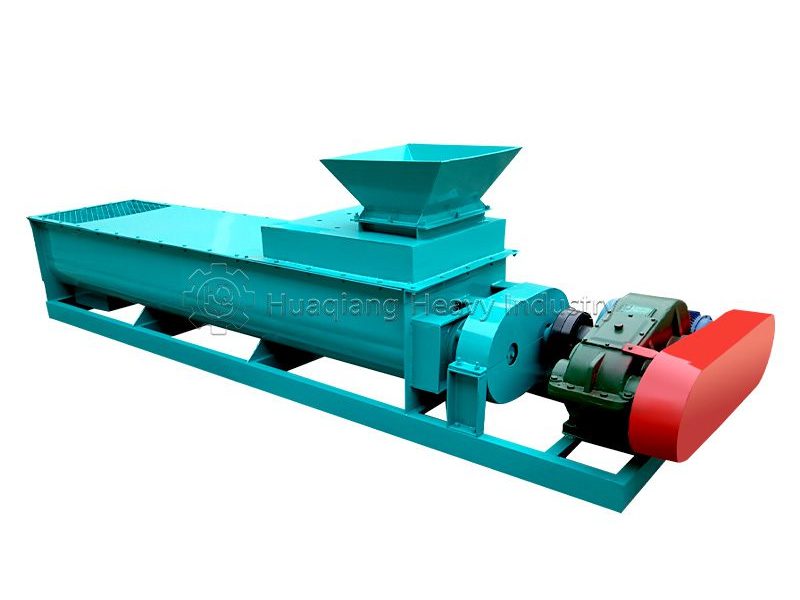
In an NPK production line, the double shaft paddle mixer is typically positioned upstream of the granulator. Powdered raw materials, having been proportioned, enter the mixer to undergo rapid kneading and homogenization before proceeding to the granulation stage. Its exceptional adaptability to sticky or moist materials ensures that the mixture remains free of clumps, even when small amounts of decomposed organic matter or recycled fines are included in the formula. Its volumetric throughput is significantly higher than that of ribbon mixers, making it well-suited for continuous, large-scale production.
Of course, there are trade-offs. The high-speed shearing action of the paddles can cause some breakage of finished granules; therefore, caution is required if the raw material feed already contains finished granules. Additionally, the paddles are subject to wear and require periodic replacement, resulting in a higher maintenance workload compared to ribbon mixers. However, since NPK fertilizer raw materials are predominantly in powder or crystalline form, the impact of breakage is minimal, allowing the mixer’s advantages in efficiency and uniformity to stand out.
In summary, the double shaft paddle mixer acts as the “guardian of homogeneity” in the NPK fertilizer production line. While it does not directly dictate the physical appearance of the granules, it fundamentally ensures the stability and reliability of the nutrient content in every bag of fertilizer.