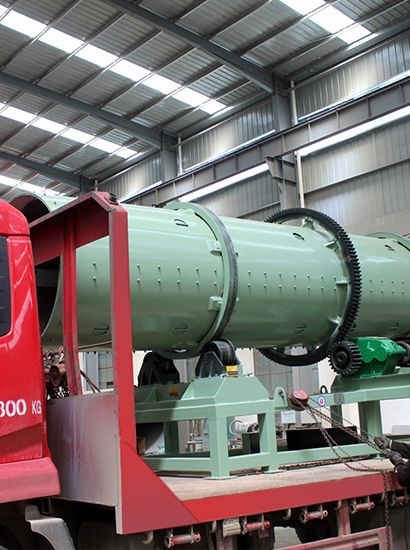
In the production of organic and compound fertilizers, NPK blending machines, BB fertilizer mixers, and double shaft paddle mixers are often conflated; however, their operating principles and application scenarios differ significantly. Choosing the wrong equipment can lead to issues ranging from uneven mixing to skyrocketing energy consumption.
The NPK blending machine prioritizes “precise proportioning.” Utilizing a rotating drum structure, it tumbles and mixes granulated single-nutrient fertilizers (nitrogen, phosphorus, and potassium) according to a specific formula. It preserves granule integrity, resulting in a smooth, durable finished product suitable for high-concentration compound fertilizers. However, it has a distinct drawback: it requires consistent particle sizes. Significant size discrepancies can lead to segregation, resulting in uneven nutrient distribution across bags.
The BB fertilizer mixer focuses on “rapid batch blending.” Typically featuring a horizontal ribbon or paddle design, it handles large capacities and completes discharge within 3 to 5 minutes, making it ideal for on-site operations at farm-level blending stations. While it can accommodate small amounts of organic additives, it is sensitive to moisture content; high humidity can cause material to stick to the walls and clump.
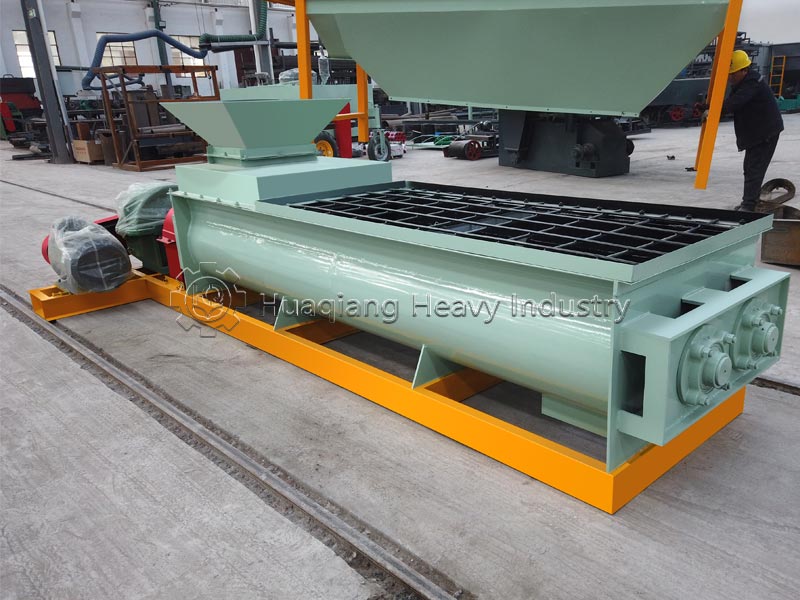
The double shaft paddle mixer is designed for “intensive mixing.” Two counter-rotating shafts drive paddles that exert strong shear and convective forces on materials—whether powdery, sludge-like, or even wet, sticky, and fibrous. It is commonly used in the kneading stage of organic-inorganic compound fertilizer production to prepare the material for granulation. Due to its high power consumption, it requires wear-resistant liners for protection.
These three types of mixers do not operate in isolation. Upstream of the mixing process, agricultural waste turners are often required to fully ferment and decompose raw materials like crop stalks and vegetable waste. Stabilizing material properties before mixing is crucial; otherwise, mixing raw, undecomposed materials directly can result in poor granule strength and uneven nutrient release.
In summary, the NPK blending machine ensures “precision,” the BB fertilizer mixer boosts “efficiency,” and the double shaft paddle mixer delivers “intensive mixing power.” Equipment selection must align with material characteristics and production targets while being integrated with upstream processes—such as turning and crushing—to establish a smooth, high-yield fertilizer production line.