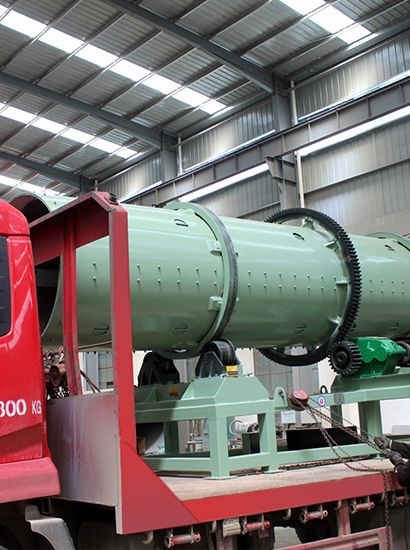
Every year, my country generates over a hundred million tons of agricultural waste—including crop stalks, vegetable residues, and spent mushroom substrate. If improperly managed, this waste becomes a source of pollution; however, effective conversion transforms it into a valuable source of high-quality organic fertilizer. Agricultural waste compost making machines are the indispensable core equipment in this organic fertilizer production process, turning “waste” into “premium fertilizer.”
Agricultural waste presents common challenges characterized by being “coarse, heterogeneous, and lightweight”: crop stalks have long fibers, vegetable residues have high moisture content and spoil easily, and spent mushroom substrate contains mixed impurities. Suitable compost turner machines employ dual-shaft shearing cutter rollers; a combination of high and low blades first cuts long fibers before displacing and aerating the material, preventing tangling while ensuring uniform mixing.

The equipment’s profound value lies in its ability to precisely regulate the fermentation process. Agricultural waste typically has a high carbon-to-nitrogen ratio, causing slow temperature rise during natural decomposition. By periodically turning the material, the machine introduces surface oxygen into the core, maintaining oxygen levels within the ideal 8%–12% range. This accelerates the proliferation of thermophilic bacteria, shortening the decomposition cycle from the 3–6 months required for natural composting to just 20–30 days. Simultaneously, the physical displacement during turning facilitates the natural evaporation of excess moisture, stabilizing the final product’s moisture content below 30% and reducing energy consumption for drying.
Furthermore, agricultural waste is often contaminated with impurities such as stones and plastic mulch film. The turner’s overload protection system and screening chain-plate design allow for preliminary sorting during the turning process, protecting the equipment and enhancing the purity of the final product.
In summary, an agricultural waste compost making machine does far more than simply “turn” material; through the combined functions of shearing, oxygen supply, moisture control, and impurity removal, it transforms chaotic waste into uniform, stable, high-quality organic fertilizer. It serves as the vital bridge between “pollution” and “resource,” with its performance directly determining the efficiency and quality of the entire conversion chain.