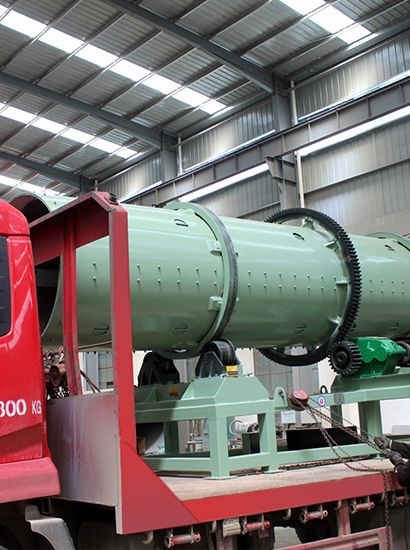
Vermicompost is hailed as the “king of organic fertilizers,” but their high viscosity and high moisture content make the turning process a double-edged sword on the production line—proper operation activates nutrients, while excessive force damages the precious aggregate structure. Therefore, the vermicompost compost making machine selection lies not in “power,” but in “flexible adaptation.”
In terms of selection, chain plate compost turning machines or double screws compost turning machines are superior solutions. They use large-area chain plates to slowly move the material, avoiding the violent shearing caused by spiral cutter shafts, effectively protecting the natural enzyme activity and beneficial bacteria in earthworm castings, and reducing physical damage to the colloidal microstructure.
In terms of operational strategy, segmented control is essential. In the early stages of fermentation, the compost pile is loose, so a large-span moving compost turner is recommended to quickly provide oxygen and raise the temperature, allowing aerobic bacteria to dominate. In the later stages of composting, the material density increases, so a shallow compost turner with a weighing system should be used, controlling the depth at 30-40 cm to prevent excessively wet material at the bottom from being forcibly turned to the surface, causing moisture imbalance.
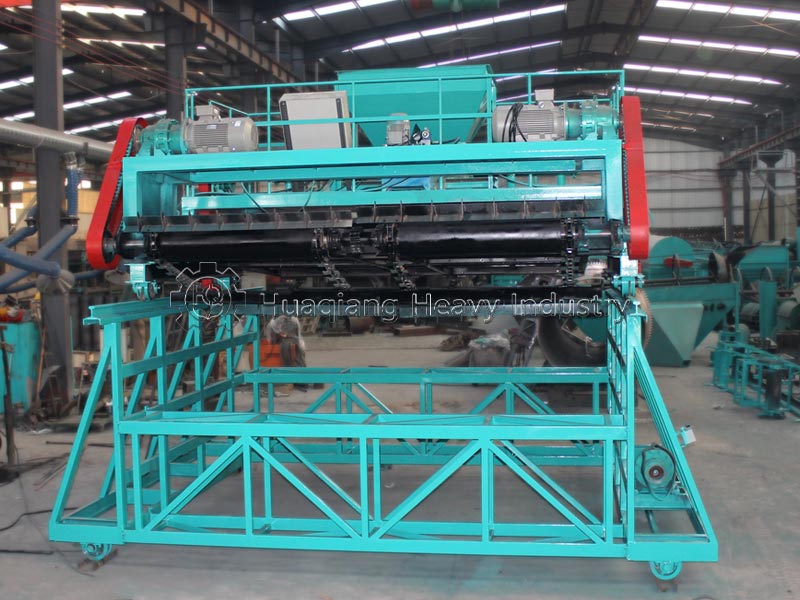
Process parameters and auxiliary equipment are equally crucial. The compost turner should be equipped with variable frequency speed control, and the turning frequency should be controlled every 2-3 days. Too high a frequency can actually break up the forming aggregates. Simultaneously, flexible crushing devices should be added before and after the compost turner to pre-break large pieces of material to a particle size of 2-5 mm, reducing equipment wear and improving the overall production line smoothness.
In short, processing vermicompost is not about “turning as often as possible,” but about “turning skillfully and accurately.” A compost turner combination that balances material protection and ventilation needs is the true fulcrum for unlocking the high-value transformation of vermicompost.