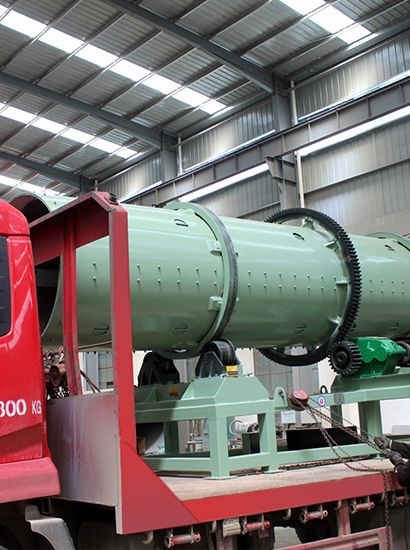
At organic fertilizer production sites, compost turners handle oxygen supply and cooling, while crushers break down materials; the two are often mentioned in the same breath. Many industry practitioners firmly believe that the half-wet material crusher is the perfect match for the compost turner. However, this seemingly logical conclusion does not actually stand up to close scrutiny.
Half-wet crushers do possess irreplaceable advantages. They can directly process fresh manure, biogas residue, or straw with moisture content as high as 40%–60% without pre-drying, thereby saving on heat source costs. For sticky, moist materials like earthworm castings or chicken manure, their unique hammer or chain structures can pulverize the material without clogging, providing a uniform initial particle size for subsequent turning—which indeed facilitates the rapid proliferation of aerobic bacteria.
However, the label “best” often obscures the limits of applicability. Half-wet crushers struggle with long-fibered, tough materials (such as whole corn stalks or tree bark), which easily wrap around the main shaft or clog the screen. Furthermore, an excessive focus on fine pulverization can turn the material into a slurry, compacting the compost pile and reducing porosity during the turning process, ultimately leading to insufficient oxygen supply. Often, the compost turner’s own cutter rollers or chain plates provide a degree of pulverization during the turning process; if the initial particle size is already within the 3–5 cm range, adding a separate semi-wet crushing step is entirely superfluous.
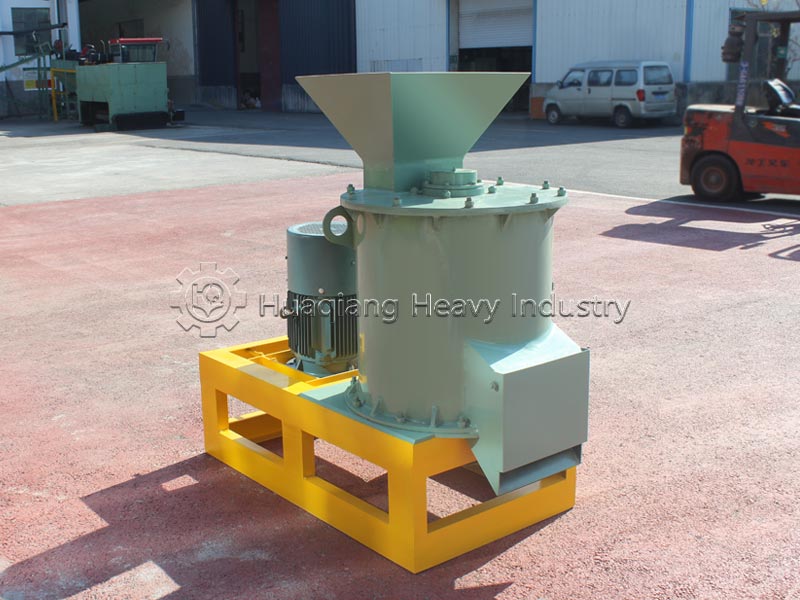
The true value of this combination depends on the process stage and the state of the material. During the pre-fermentation stage, if lumps make up more than 30% of the raw material, a crusher is essential, establishing a “crush-then-turn” workflow with the compost turner. However, in the mid-to-late stages of fermentation, the material has already naturally decomposed and loosened; forced crushing at this point would only destroy the material aggregates, so the compost turner can operate effectively on its own.
In summary, the half-wet material crusher and the organic fertilizer compost turner are not a match made in heaven. Rather than striving for the “optimal,” it is better to return to actual material test data—such as particle size distribution, moisture content, and fiber content—before deciding whether to set up a system and which type of crushing equipment to select.