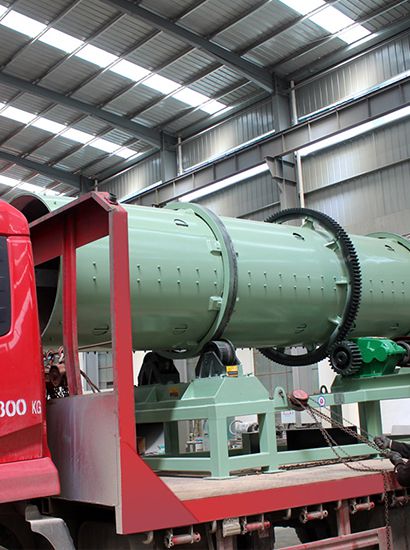
“Organic fertilizer compost turner” is a broad term covering various types of fermentation equipment, such as chain-plate and drum models. The double screws compost turner is a specialized variant often mistaken for a mere “upgraded version” of standard models; however, the differences between them are significant.
They operate on different principles. Standard turners typically rely on a single-shaft cutter roller or a chain-plate system—using high-speed rotation to cut material or moving large sections of material en masse via chain plates. In contrast, the double screws turner employs two parallel screw shafts rotating in opposite directions; the blades create intense shearing, convection, and lateral transport in the overlapping zone. Material is not only turned over but also pushed alternately from side to side, resulting in a more complex mixing path.
They offer superior mixing uniformity. For applications requiring the addition of microbial agents, C/N ratio adjustments, or the blending of bulking agents, the double screws structure achieves more thorough homogenization during the turning process. Standard cutter-roller models primarily turn material vertically with limited lateral mixing, while chain-plate models offer almost no active mixing capability. The double screws design integrates turning and conveying, allowing temperature, moisture, and nutrient levels across different layers of the compost pile to equalize more rapidly.
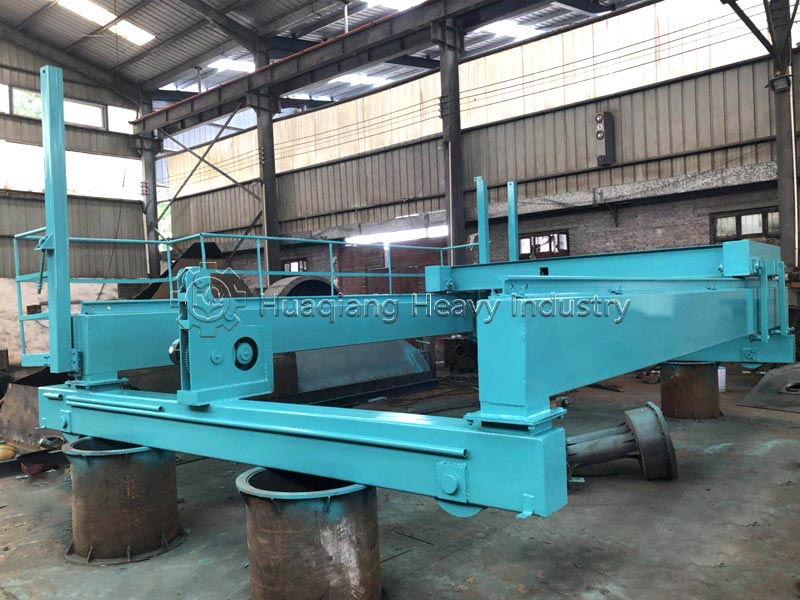
They have different areas of adaptability. The double screws model excels with high-viscosity, clump-prone materials—such as high-moisture sludge, chicken manure, and pharmaceutical residues—where the screw blades forcibly break up clumps and prevent shaft wrapping. However, its complex structure entails higher power consumption and maintenance costs, and it is susceptible to entanglement by long fibers. Among standard models, chain-plate turners are best suited for loose straw, while cutter-roller models offer the best cost-performance ratio for conventional livestock manure.
Selection criteria differ. The double screws model is worth considering when dealing with heavy, sticky materials, complex formulations, or strict mixing requirements. For conventional manure or straw, standard turners are sufficient and offer greater cost-efficiency regarding investment and maintenance.
Ultimately, the double screws compost turning machine is not merely a simple substitute but a specialized evolution designed to meet the specific needs of high-viscosity and high-uniformity applications. Understanding material characteristics is key to selecting the right equipment.