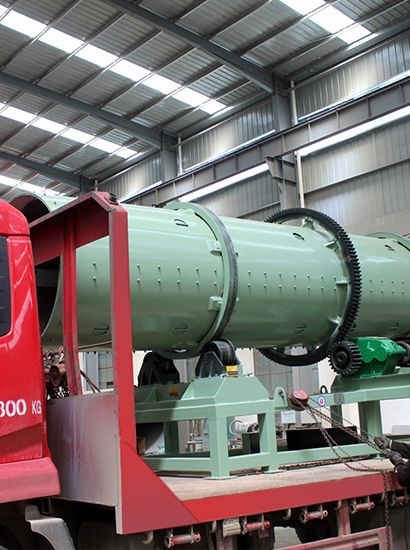
A chicken manure compost turning machine is not merely a standard compost turner fitted with different blades. Every aspect—from the cutter drum to the propulsion system—is specifically engineered to address the distinct characteristics of chicken manure: its high stickiness, heat generation, and corrosive nature.
Cutter Drum Design: The core feature is a self-cleaning, “broken-tooth” (spaced-blade) configuration. Because chicken manure is extremely sticky, a conventional spiral-blade drum would become clogged into a solid mass within half an hour. Chicken manure compost turning machines utilize a spaced-blade arrangement; as the drum rotates, the blades scrape against one another, forcibly dislodging any wet, adhered material. Some models even incorporate a scraper blade behind the drum to remove any remaining residue.
Propulsion System: A tracked undercarriage with hydraulic drive. Chicken manure storage sites are often saturated with leachate, creating soft, wet ground where wheeled equipment would easily slip or sink. Chicken manure compost turning machines typically employ wide tracks, which provide a low ground-bearing pressure and superior traction. Powered by hydraulic motors, they can move steadily across muddy terrain.

Power Configuration: High torque at low rotational speeds. Given the high resistance of chicken manure, a high-speed cutter drum would likely overload the motor. Instead, these machines use high-torque hydraulic motors or gear-reduced motors to drive the drum at lower speeds—providing sufficient force to break up clumps while avoiding excessive pulverization and unnecessary energy waste.
Corrosion Resistance and Sealing: Reinforced for an ammonia-rich environment. Chicken manure releases high concentrations of ammonia and hydrogen sulfide, which are highly corrosive. To combat this, the main shaft bearings feature multi-layer seals, the machine frame is coated with heavy-duty anti-corrosive paint, electrical components utilize waterproof quick-connect plugs, and hydraulic lines are treated to resist acid. These “hidden” design elements ultimately determine the equipment’s service life in such a harsh environment.
It is precisely these targeted design features that allow chicken manure compost turning machines to operate reliably under conditions characterized by high moisture, corrosiveness, and heavy mechanical loads.