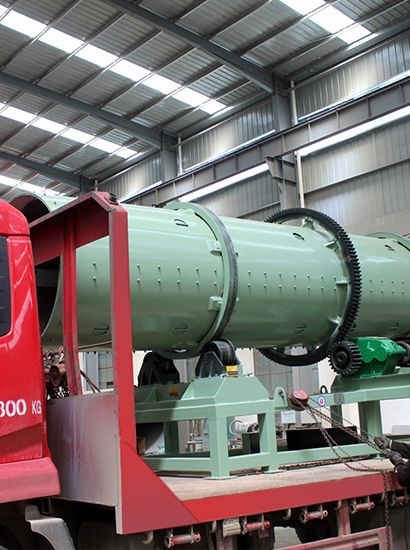
When selecting a turner for chicken manure organic fertilizer fermentation, one should not focus solely on price; instead, the decision should be based on the plant’s daily processing capacity and site conditions. A mismatch between equipment specifications and production scale can easily lead to issues such as raw material accumulation, delayed fermentation, or the inefficient use of space and capital.
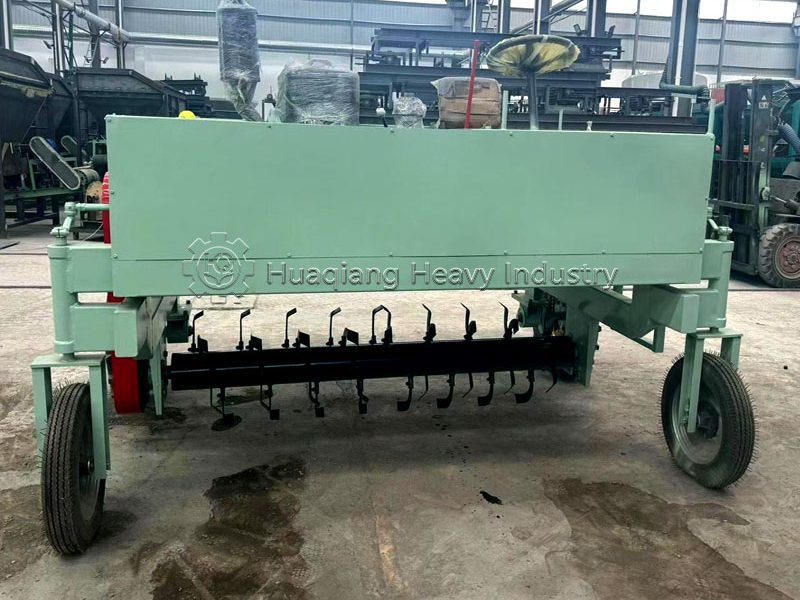
Small-scale plants, which process 5–15 tons of chicken manure daily, often operate as workshop-style facilities with limited space and budgets. For these, a wheel-type compost turning machine is ideal. Such equipment is highly maneuverable and allows for windrow fermentation on the ground, eliminating the need for complex civil engineering. While its processing capacity is limited, the low initial investment makes it well-suited for small operations that collect chicken manure locally and sell the finished fertilizer in the immediate area.
Medium-scale plants, processing 15–60 tons daily—the most common scale for chicken manure processing—should prioritize hydraulic trough compost turning machines. This setup requires the construction of fermentation troughs, with the equipment operating along rails. It offers greater turning depth and superior oxygenation, resulting in a stable fermentation cycle. These systems can consistently process fresh chicken manure, ensure controllable decomposition quality, and integrate seamlessly with downstream processes like crushing and granulation. The investment in both equipment and civil infrastructure is moderate.
Large-scale plants processing over 60 tons daily, which benefit from a steady supply of raw materials and aim for high-volume, continuous fermentation, can utilize large-span trough-type turners. These allow for simultaneous operation across multiple troughs, offering a high degree of automation and requiring minimal manual labor. While the initial investment in civil works and equipment is higher, the cost per ton of processed material is lower. This approach is well-suited for operations linked to large-scale livestock farms, with products intended for broader distribution markets.
Of course, scale is not the only factor; site dimensions and the feasibility of constructing fermentation troughs must also be considered. Windrow-based equipment struggles to handle large volumes of high-moisture chicken manure, while trough-based systems depend on specific civil infrastructure. Only by carefully weighing processing scale against actual site conditions can a chicken manure compost turning machine achieve optimal fermentation results.