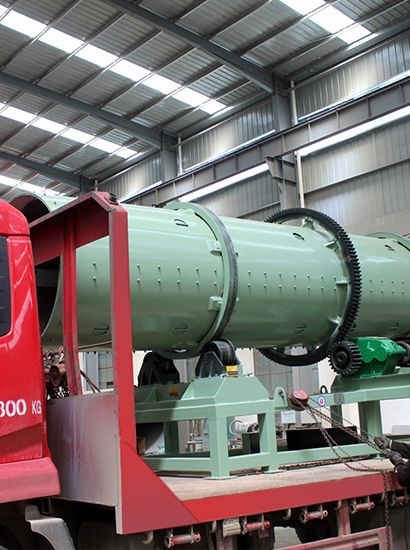
When building an NPK fertilizer production line, the biggest mistake is purchasing equipment before determining the process. A sound strategy involves working backward: define the product first, then the process, and finally the equipment; getting this order wrong risks wasting your investment.
Step 1: Determine the granulation method based on the formula. High-nitrogen formulas are sticky, making rotary drum or pan granulation—supplemented by high-intensity mixing—the ideal choice. High-potassium formulas flow well but cause significant wear on granulators, so material abrasion resistance is critical. When formulas contain organic matter or secondary/micro-nutrients, the forced shearing action of granulators ensures better granulation rates. Once the formula is set, the granulation method is essentially locked in.
Step 2: Determine mixing and downstream processes based on production capacity. For small lines (1–3 tons/hour), batch mixing suffices, and downstream processes can be simplified. For medium lines (5–15 tons/hour), a double shaft paddle mixer paired with a rotary drum granulator ensures smoother operation. For large lines (over 20 tons/hour), continuous metering, mixing, and drying are mandatory; a breakdown in any single link can cripple the entire line. Matching the throughput of the mixing and granulation stages is a strict requirement.
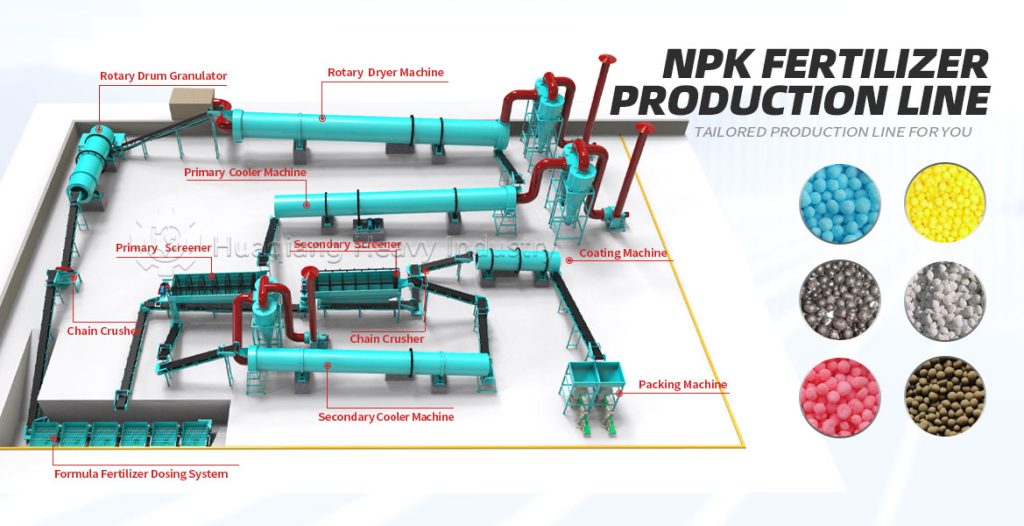
Step 3: Determine pre-treatment based on raw materials. Urea is brittle, ammonium phosphate is hygroscopic, and potassium salts are hard; different materials impose distinct requirements for crushing and conveying. If using recycled or caked materials, crushing and screening units must be added at the front end; if the material fineness already meets standards, crushing can be skipped in favor of direct metering.
Step 4: Build in flexibility for adjustments. Market formulas change, and raw material prices fluctuate. Incorporate buffer silos between mixing and granulation stages and include return-material channels at the screening stage to facilitate future formula adjustments or the addition of coating processes. A production line shouldn’t be maxed out; leaving some headroom allows you to adapt to changes.
Ultimately, the core of the configuration strategy is: “Product dictates process; process dictates equipment; capacity dictates specifications.” By clearly defining the fertilizer type, production volume, and raw materials first—and then matching each stage accordingly—you can build a production line that runs smoothly and remains adaptable.