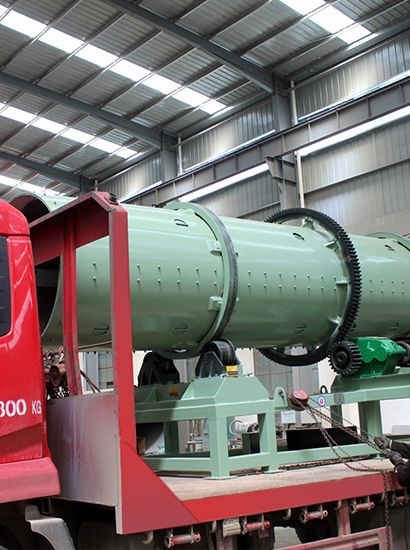
While fermented and decomposed chicken manure is rich in nutrients and commands a good market price, the granulation process often proves challenging. When using traditional disc or rotary drum granulators, operators frequently encounter issues such as material sticking to the equipment, low pelletization rates, and poor granule structural integrity. The emergence of new type organic fertilizer granulators is changing this landscape.
Chicken manure has a low fiber content; once decomposed, it becomes a fine, sticky, and heavy substance that lacks a structural framework. Traditional granulators rely on a rolling motion to form pellets, but because of its high stickiness, chicken manure tends to accumulate in thick layers on the surface of the equipment—requiring frequent cleaning—and often yields a pelletization rate of less than 50%. Even when pellets are successfully formed, their loose internal structure makes them prone to breaking during drying and transport, leading to high rates of material that must be sent back for reprocessing.
To address the sticky, fine-textured nature of chicken manure, new type organic fertilizer granulators utilize a forced-extrusion method. Instead of relying on rolling and agglomeration, the material is pressed through die apertures to take shape. In fact, higher stickiness results in denser, stronger extruded granules—a significant improvement over the output of disc granulators. Some models also incorporate variable-frequency drive speed control and integrated cleaning mechanisms, allowing for real-time adjustments to the extrusion speed based on moisture content, which minimizes downtime caused by clogged dies.
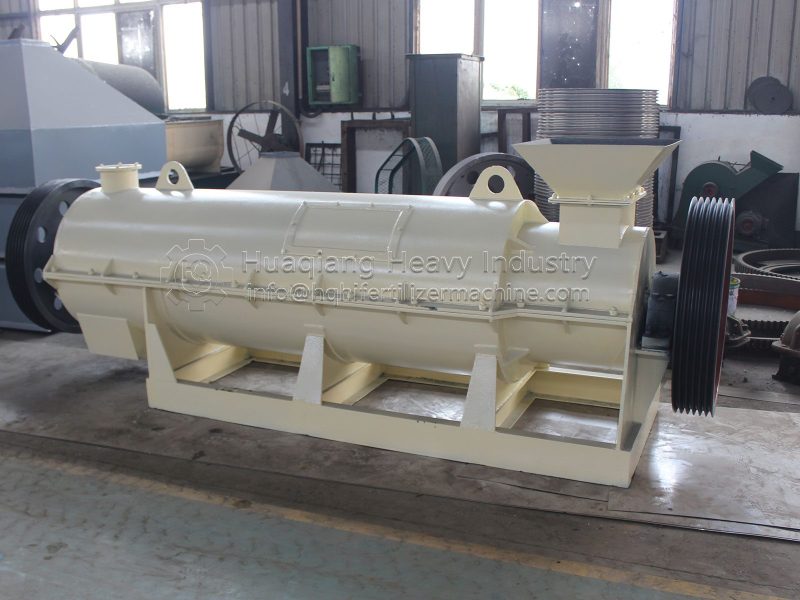
Traditional granulators require strict control of chicken manure moisture content—typically between 25% and 30%; if it is too high, the material sticks to the equipment, and if it is too low, it fails to form pellets. By adjusting the extrusion ratio and die clearance, new type organic fertilizer granulators can operate reliably with moisture levels between 30% and 40%. This eliminates the need for some drying stages, thereby reducing energy consumption.
Extruded chicken manure granules feature a smooth surface and moderate hardness. They exhibit low breakage rates during cooling and screening, boosting the final product yield to over 80%. Furthermore, they maintain good disintegration properties—breaking down quickly once applied to the soil—ensuring that the release of fertilizer nutrients remains unaffected.
Overall, these new type organic fertilizer granulators are far better suited for processing chicken manure than traditional models. They effectively transform the “stickiness” of chicken manure from a major obstacle into an advantage, providing a critical breakthrough for the commercialization of chicken manure-based organic fertilizers.