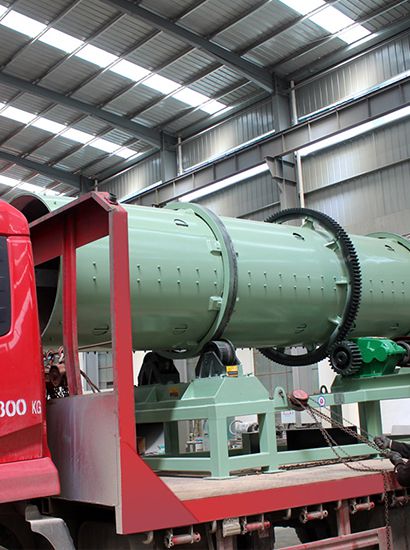
When people hear “organic fertilizer compost turning machine,” they often assume it is used exclusively in commercial organic fertilizer production lines. In reality, as the demand for waste-to-resource conversion grows, these machines have found applications far beyond traditional fertilizer plants.
On-site processing facilities at livestock farms. To meet environmental regulations, large-scale poultry and cattle farms often incorporate fermentation units. Here, turners facilitate daily aeration and odor control, converting fresh manure into raw organic fertilizer on-site—thereby reducing transportation costs and pollution risks. Given the limited space in such settings, self-propelled, crawler-type turners are the preferred choice.
Centralized organic fertilizer plants. This is the traditional domain for fertilizer compost turning machines. These facilities handle a diverse mix of manure, crop straw, and mushroom cultivation waste. Given the varied formulations and continuous batch processing, they typically employ trough-style or heavy-duty crawler-type machines, prioritizing operational stability and high throughput.
Municipal sludge treatment centers. Due to the high viscosity and corrosive nature of sludge, standard turners are often inadequate. Equipment here requires specialized anti-stick mixing drums and corrosion-resistant seals; furthermore, the depth and frequency of turning must be precisely calibrated to align with odor-control systems.
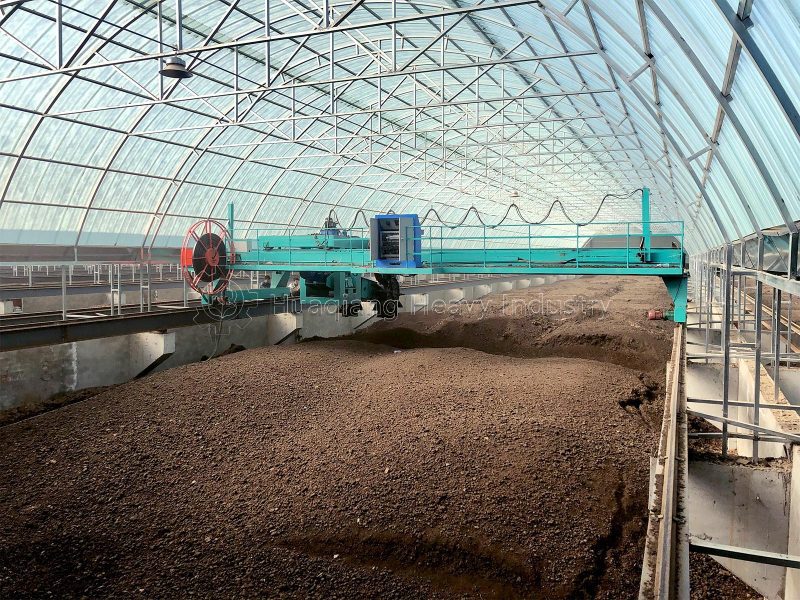
Landscaping and green waste processing sites. Waste such as tree branches, fallen leaves, and grass clippings consists of long, low-density fibers. Turners used here must feature a shredding function to cut these fibers before mixing; otherwise, the material would tangle around the mixing shaft, leading to uneven fermentation.
Spent mushroom substrate (SMS) processing. SMS tends to clump together. Turners are used during the stages of de-bagging, shredding, and fermentation, requiring mixing drums capable of breaking up compacted material without over-pulverizing it.
Vermiculture (earthworm farming) operations. Earthworm castings have a delicate structure. Turners in these settings must move material at low speeds rather than using high-speed shearing; chain-plate or flexible-blade systems are better suited to ensure the granular structure remains intact.
Each scenario carries distinct requirements: livestock farms prioritize flexibility; commercial fertilizer plants focus on production capacity; sludge centers emphasize corrosion resistance; and landscaping waste sites demand effective shredding capabilities. The shift from “processing manure” to “processing all types of biodegradable organic matter” marks a process in which the value of compost turning machines is being rediscovered.