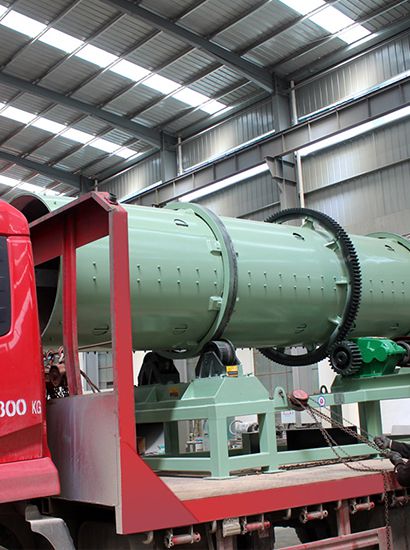
Chain-plate compost turning machines move material across a large area at low speeds, rather than relying on high-speed rotating blades for shearing. This operational characteristic means they are not universally applicable to all types of fermentation. They are best suited for aerobic fermentation processes that involve viscous (sticky) materials, require continuous operation, and necessitate the preservation of the material’s aggregate structure.
Continuous deep-trench aerobic fermentation: In this process, fermentation trenches can span tens of meters. Material moves gradually from the feed end to the discharge end, with the chain-plate compost turning machine traveling back and forth along rails to shift a set amount of material forward each day. This process requires stable operation and consistent turning depth—tasks for which the chain-plate design is ideally suited. It is particularly effective for highly viscous materials like sewage sludge or chicken manure, as it avoids the “clogging” or shaft-jamming issues often experienced with rotating-blade turners.
Batch-trench aerobic fermentation: Here, a trench is filled with material, which is turned multiple times throughout the fermentation cycle before the entire batch is removed once matured. The chain-plate compost turning machine’s low-speed, pushing action ensures uniform turning while causing minimal damage to the material’s physical structure. For substances like vermicompost (earthworm castings) or mushroom substrate—where preserving aggregate structure is important—this gentle turning method is far superior to high-speed shearing.
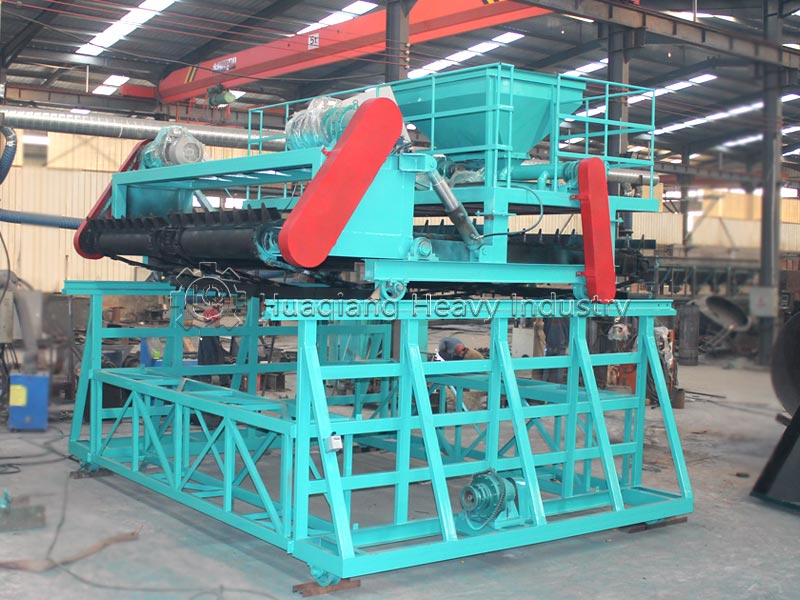
Large-span windrow fermentation: When dealing with wide windrows or highly viscous materials, a chain-plate turner can operate by spanning the windrow, lifting the material, shifting it, and depositing it elsewhere. This prevents the slippage or “spinning in place” that rotating-blade machines might encounter on wet, sticky windrows. However, because chain-plate compost turning machines have a limited ability to cut long fibers, caution should be exercised when handling windrows with a high proportion of straw or stalks; such scenarios are better managed by specialized agricultural waste compost turning machines.
It is also important to recognize where these machines are not suitable. Static aerobic fermentation does not require turning at all; high-speed, high-temperature “rapid” fermentation processes demand frequent, intense shearing to supply oxygen—a pace that is too slow for chain-plate systems. Furthermore, for small-scale, intermittent operations with limited space, the investment and footprint required for a chain-plate compost turning machine are generally not cost-effective.
Ultimately, chain-plate compost turning machines are best suited for fermentation processes that are continuous, involve viscous materials, and require the preservation of the material’s structural integrity. Look first at the materials and the mode of operation, then discuss the equipment.