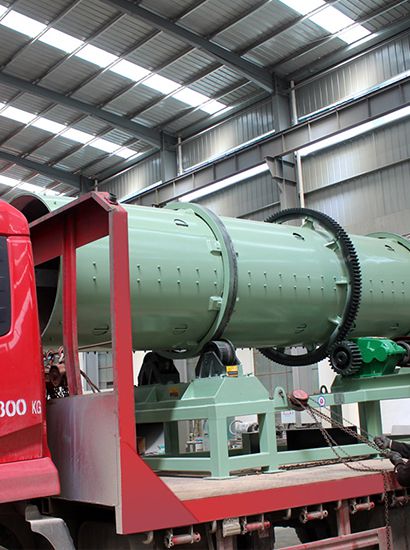
The answer is not a simple “yes” or “no.” While the granulation stage itself typically operates at ambient or low temperatures, whether the entire organic fertilizer production line qualifies as “low-temperature” depends on the subsequent drying stage.
Let’s look at the granulators. Modern new type stirring tooth-drum granulators use high-speed rotating pins to generate shear and friction, causing materials to agglomerate—a process that requires no external heat. Disc granulators form granules as material rolls within an inclined rotating disc; models designed for bio-organic fertilizers can maintain temperatures between 30°C and 55°C. Extrusion granulators rely on mechanical pressure to force powdered material through die holes, with temperature increases typically kept below 50°C. These methods are all forms of low-temperature granulation, primarily intended to preserve functional microorganisms and humic acids—as temperatures exceeding 60°C would lead to significant microbial inactivation and the degradation of organic matter. Furthermore, low-temperature granulation eliminates the need for high-temperature drying or steam conditioning prior to the granulation step, thereby simplifying the process and reducing energy consumption.
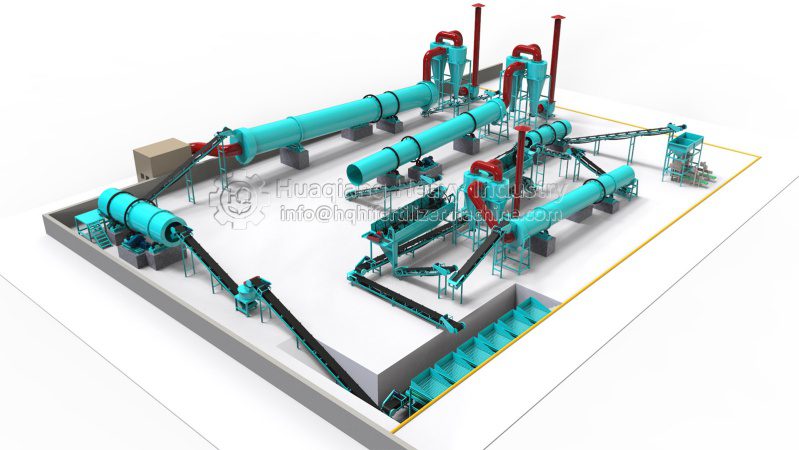
However, the drying stage—which follows granulation—is a different matter. Some organic fertilizer production lines still incorporate dryers, where hot air temperatures can reach 60°C–70°C or higher to rapidly reduce the moisture content of the granules. If the drying temperature is not carefully controlled, the active components preserved during the low-temperature granulation phase may be lost at this stage.
Therefore, a more accurate assessment is that while the granulation process for organic fertilizers has generally shifted toward lower temperatures, whether an entire production line is truly “low-temperature” depends on the coordinated control of both granulation and drying. For bio-organic fertilizers, temperature limits must be strictly maintained throughout both stages; for conventional organic fertilizers, low-temperature granulation serves primarily as a means to save energy and simplify the production process, rather than being a rigid requirement.