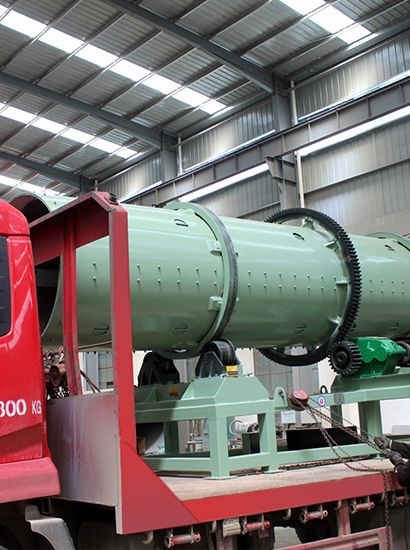
In organic fertilizer fermentation process, some compost turners operate back and forth along fixed rails, while others move around freely like tractors. This represents the most visible distinction between trough-type and self-propelled compost turners. Neither is inherently superior; suitability is the deciding factor.
The trough-type compost turning machine is a “disciplined deep-tiller.” It operates along rails within fixed fermentation troughs; turning depth and speed can be precisely preset, the cutter drum’s entry angle remains constant, and oxygen supply uniformity surpasses that of mobile units. Powered by an external electricity source, it offers low operating costs, making it ideal for large, centralized fermentation facilities. However, this comes at the cost of high infrastructure investment—requiring the construction of concrete troughs and the laying of rails. Once built, the production line scale is fixed and difficult to adjust.
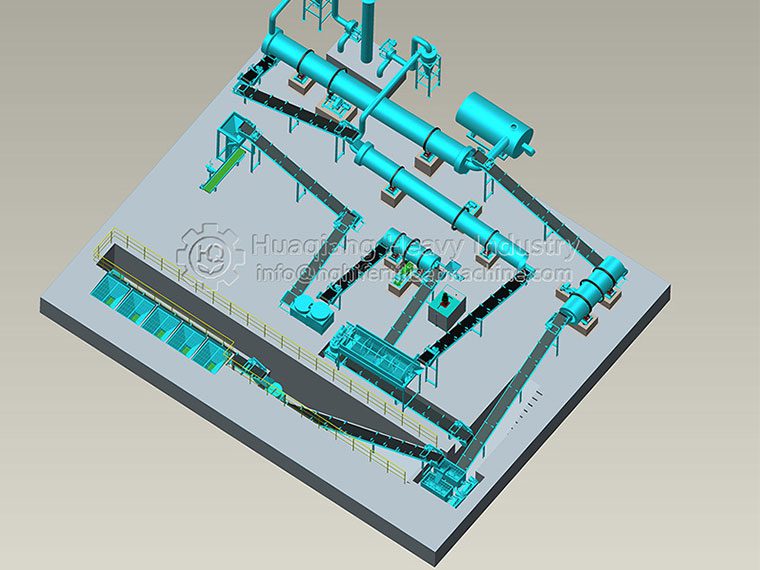
The self-propelled compost making machine is a “free-roaming ranger.” Equipped with its own chassis and power system, it requires no rails and moves freely across paved surfaces. It offers flexible mobility—allowing a single unit to service multiple windrows or fermentation troughs—making it suitable for operations with dispersed sites or varied materials. Yet, this mobility comes with trade-offs: turning depth and speed rely on operator experience, resulting in less consistency than trough-type models; diesel engine noise and exhaust require additional management in enclosed spaces, and fuel costs exceed electricity expenses.
Regarding application scenarios: for newly built, large-scale organic fertilizer plants with fixed production lines, the trough-type model is the more reliable choice. For small-to-medium livestock farm blending stations or operations on temporarily leased land, the self-propelled model offers flexibility and saves on infrastructure costs, allowing for easy relocation.
Each has its pros and cons. The key to selection isn’t comparing which is more advanced, but determining which best aligns with your specific site and operational rhythm—letting the disciplined handle structured tasks and the mobile handle flexible ones ensures the optimal fit.