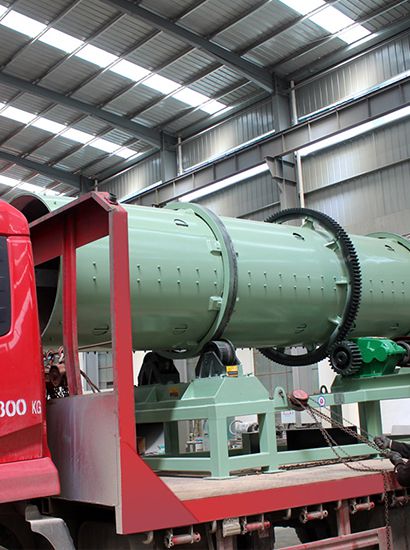
Although both contain “NPK” and “mixing” in their names, NPK blending machines and the mixers used in NPK fertilizer production lines perform essentially opposite functions. The former operates at the final stage before the finished product leaves the facility, while the latter stands at the very first gateway, preceding the granulation process.
The nature of the materials differs, as do the operational characteristics of the equipment. NPK blending machines handle pre-granulated components—such as urea, ammonium phosphate, and potash—with the goal of blending them proportionally while minimizing granule breakage. Consequently, specialized “bulk blend” BB fertilizer mixers are used; these operate at low speeds with a gentle mixing action. In contrast, production line mixers handle raw materials in powder or crystalline form. They must forcefully blend ingredients of varying densities and fineness to ensure a consistent feed for the granulation process—a task typically handled by double shaft paddle mixers, which offer significantly higher shear strength.
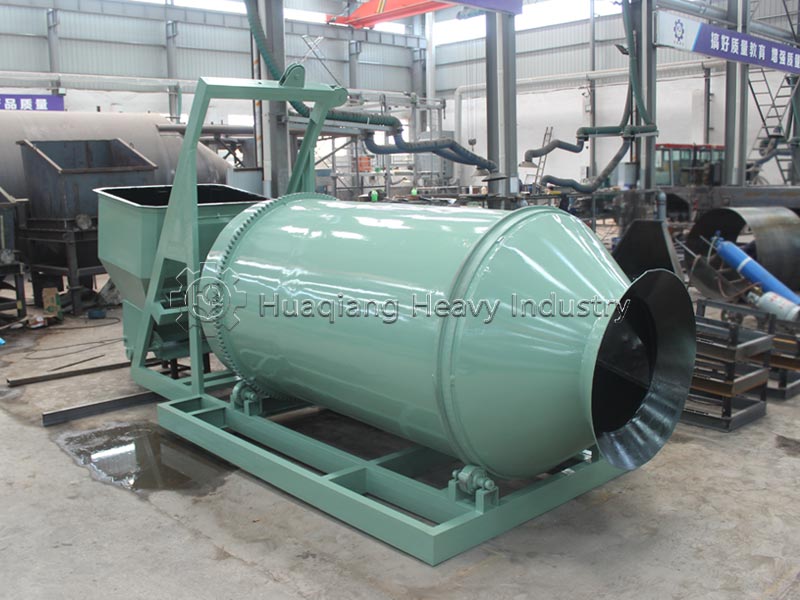
Their positions in the process flow also differ. The blender acts as the “final station,” where the mixture proceeds directly to packaging; the key criteria here are nutrient uniformity across every bag and the physical integrity (smoothness) of the granules. The production line mixer serves as the “starting station,” where the mixture must subsequently undergo granulation, drying, and screening; here, the focus is on material homogeneity and moisture content, which are critical for successful granulation. For a blender, the primary concern is avoiding over-mixing, which could lead to granule breakage or segregation (separation by size/density). For a production line mixer, the primary concern is avoiding uneven mixing, which could result in nutrient imbalances within the final granules.
Tolerance for moisture and additives also varies. Blenders generally require dry, free-flowing granules, with anti-caking agents typically applied via spraying after the mixing process. Production line mixers, however, must accommodate a certain level of moisture in the powdered raw materials. They may also require the addition of binders or microbial agents during the mixing phase, necessitating more robust shaft-end sealing and resistance to material adhesion.
Therefore, when producing bulk-blended (BB) fertilizers, one should choose an NPK blending machine designed to minimize breakage and segregation. Conversely, when setting up a compound fertilizer granulation line, one should select a production line mixer capable of high-shear mixing and resistant to the challenges posed by moist, powdery materials. These two types of equipment are not interchangeable; rather, they belong to entirely different process workflows.