When purchasing an organic fertilizer compost turning machine, many people’s first instinct is to look for the cheapest option. However, after a few years of actual use, one realizes that “cost-effectiveness” does not mean the lowest purchase price, but rather the lowest processing cost per ton of material.
Step 1: Consider material characteristics. For sticky materials like chicken manure or sludge, you must choose a design that prevents adhesion; otherwise, the cutter roller will clog, and the time cost of stopping to clean it will far exceed any savings on the equipment’s initial price. For fibrous materials like cow manure or straw, the design must prevent tangling; chain-plate compost turners or cutter rollers with shearing capabilities are more suitable. Choosing the wrong machine for the material is a waste of money, no matter how cheap it is.
Step 2: Consider production scale. For small-scale compost operations processing a few tons daily, a self-propelled compost making machine is the most cost-effective choice—it requires no rails, offers flexible maneuvering, and one machine can handle the entire site. For medium-scale lines processing tens of tons daily, a trough-type compost turner offers higher efficiency and lower electricity costs compared to fuel, making it more economical in the long run. For large-scale continuous production lines, chain-plate or heavy-duty trough-type turners—despite higher initial investment—offer low failure rates and labor savings, resulting in the lowest cost per ton.
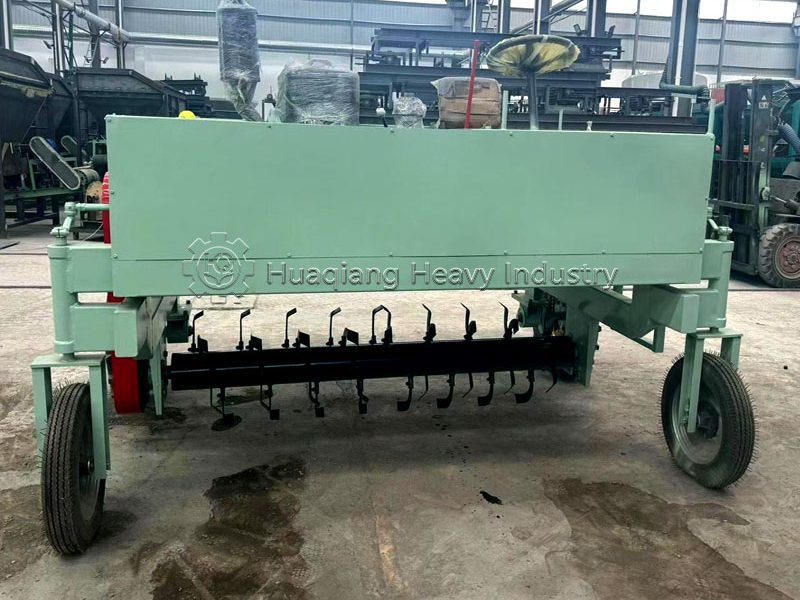
Step 3: Consider site conditions. If the ground is paved and the site is open, a self-propelled model is the top choice, as it eliminates the need for rail infrastructure. For operations with fixed troughs and clearly planned layouts, trough-type turners offer greater stability. In muddy or slippery yards, a crawler chassis is more reliable than a wheeled one; getting a vehicle stuck even once can delay the processing of an entire batch of material.
Step 4: Calculate total operating and maintenance costs. Hydraulic systems require less physical effort to operate, but aging hoses, fluid changes, and valve assembly repairs represent ongoing expenses. Mechanical drive systems are simple in structure, use inexpensive standard parts, and are easy to maintain. For small-scale production, mechanical drives are often more cost-effective; for large-scale continuous operations, the efficiency advantages of hydraulic systems can offset the maintenance costs.
Ultimately, the most cost-effective choice is equipment with capabilities that precisely match your needs—avoiding both excess capacity and compromises. By first clarifying the four factors—material, scale, site, and budget—and then comparing the total cost of ownership, the right choice becomes clear.