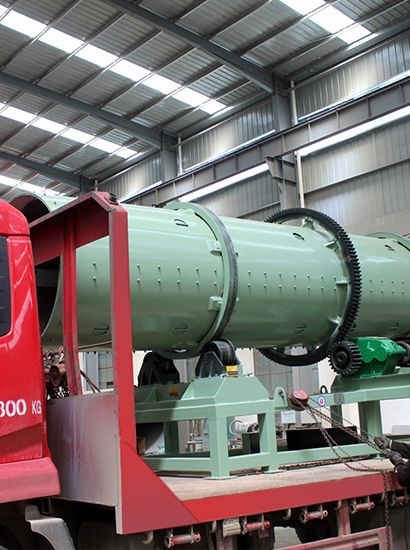
In organic fertilizer production, the turning and mixing of compost during fermentation is the critical step that determines the quality of decomposition. As a mainstream piece of equipment for trough-style fermentation, the chain compost turning machine plays a pivotal role in livestock manure treatment due to its ability to ensure uniform turning and deep-layer oxygenation. It is a key component of agriculture compost production machine and serves as the core element at the front end of the entire organic fertilizer production line.
The chain compost turner operates on a fixed rail system; chain plates continuously lift material from the bottom of the fermentation trough and cast it backward, facilitating forced aeration and uniform mixing. Compared to wheeled models, it offers more consistent turning depth (reaching 2–2.5 meters) and superior shearing and breaking capabilities for raw materials with high fiber content or strong cohesiveness (such as cattle manure and straw). However, it requires the construction of fixed fermentation troughs, entailing higher civil engineering costs and offering less flexibility than mobile equipment.
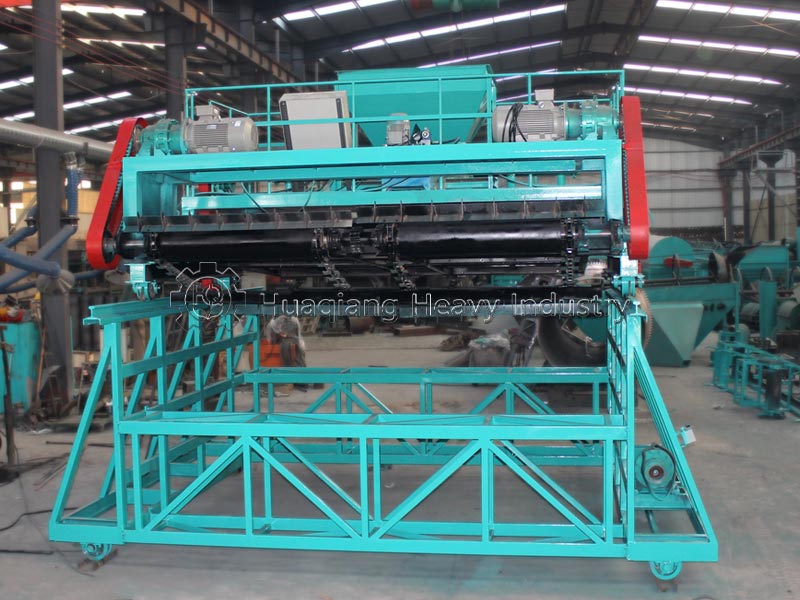
Within the agriculture compost production machine ecosystem, the chain compost turner integrates with trough systems, aeration piping, and deodorization units to form a complete fermentation module. Parameters such as turning frequency, travel speed, and aeration volume can be adjusted via an electronic control system, ensuring high process controllability; this makes it ideal for standardized fermentation management in medium-sized organic fertilizer projects with annual capacities of 10,000 to 30,000 tons.
In the context of the overall production line, the compost turner is positioned at the very beginning, responsible for decomposing raw materials over a period of 15–25 days before the material moves on to crushing, batching, granulation, and packaging. The uniformity of decomposition directly impacts the load on the crusher and the granulation yield; higher quality at the front end ensures smoother operation in the downstream stages.
The chain compost turner is best suited for trough-style composting scenarios where the site is fixed and process control requirements are stringent. Before selecting this equipment, it is essential to evaluate civil engineering investment costs and ensure proper capacity alignment with upstream and downstream processes.