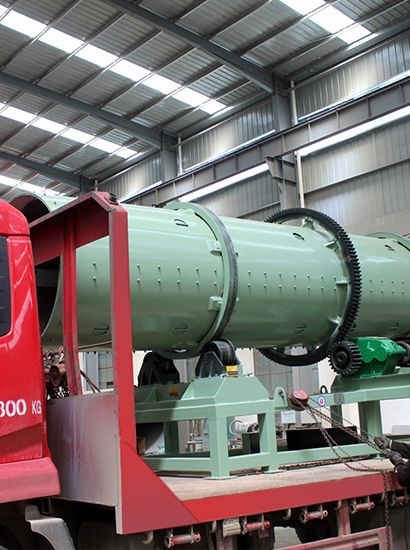
Rotary drum granulators are widely used in inorganic fertilizer processing due to their advantages of continuous operation, stable granulation, and adjustable parameters. Their forming principle is compatible with most inorganic fertilizer raw materials, especially those requiring large-scale, granulated processing.
The most suitable are NPK compound fertilizers. These fertilizers require mixing multiple components according to a fixed formula. Rotary drum granulators can achieve uniform mixing and continuous granulation. Adjusting the rotation speed and tilt angle ensures uniform granules and balanced nutrient content, making them suitable for large-scale batch production.
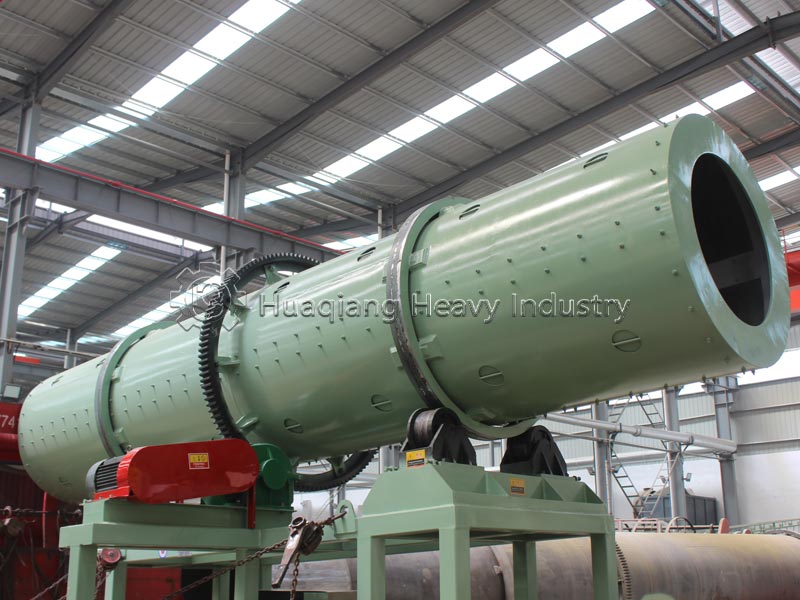
Secondly, single-element inorganic fertilizers, such as urea, potassium chloride, and ammonium sulfate, are suitable. These raw materials have high purity and moderate viscosity, requiring no complex pretreatment. They can be formed directly by the rotary drum granulator, producing compact granules that are easy to store, transport, and apply.
In addition, micronutrient inorganic fertilizers (calcium, magnesium, zinc, etc.) are also suitable. Micronutrients can be mixed with the carrier during granulation, preventing nutrient loss and improving application convenience.
It should be noted that rotary drum granulators are not suitable for inorganic fertilizer raw materials that are too sticky or extremely hard. In summary, they are suitable for NPK compound fertilizers, single-element fertilizers, and micronutrient fertilizers, and can meet the needs of large-scale granulation processing of inorganic fertilizers.