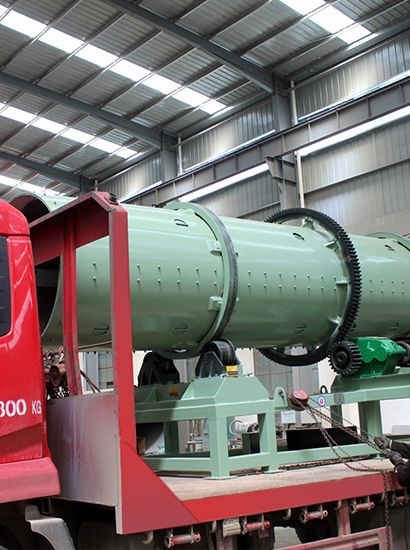
The processing of inorganic fertilizers (such as NPK compound fertilizers and single-element fertilizers) demands high efficiency, energy saving, and uniform particle size. Roller press granulator production lines, with their advantages of dry granulation, eliminate the need for drying, are well-suited to the characteristics of inorganic fertilizer raw materials, and are the preferred choice for large-scale inorganic fertilizer processing.
The core processing step is high-pressure roller pressing, which eliminates the need for large amounts of water, avoiding the risk of moisture absorption and clumping in inorganic fertilizers. Before processing, the raw materials must be pulverized to a uniform fineness and precisely mixed according to the formula to prepare for roller pressing.
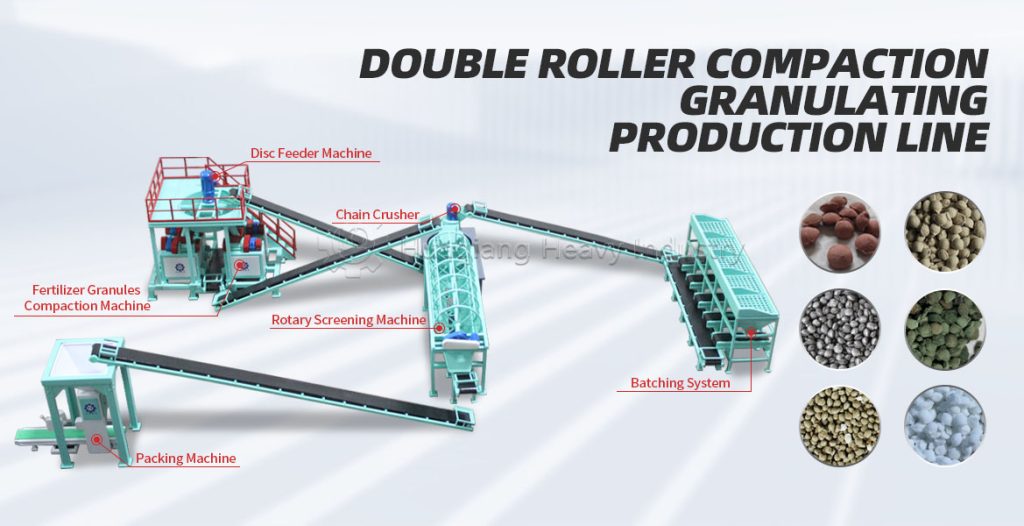
During the core processing, the mixed raw materials are fed into a double roller press granulator, where they are pressed into flakes by counter-rotating rollers under high pressure. After crushing and screening, uniform particles are obtained. Unqualified particles can be returned for secondary processing, reducing losses. The entire process eliminates the drying step, resulting in low energy consumption, no wastewater, and greater environmental friendliness.
In practice, it is necessary to control the fineness of the raw materials, the uniformity of mixing, and the roller pressing pressure to prevent loose particles. This production line features a simple process, high automation, and continuous production capability. The finished granules have high strength and uniform nutrient content, facilitating storage, transportation, and application.
In summary, the roller press granulator production line is well-suited for the dry processing of inorganic fertilizers. With its energy-saving, environmentally friendly, and highly efficient advantages, it solves the problems of clumping and high energy consumption during processing, making it a practical solution for the large-scale processing of inorganic fertilizers.