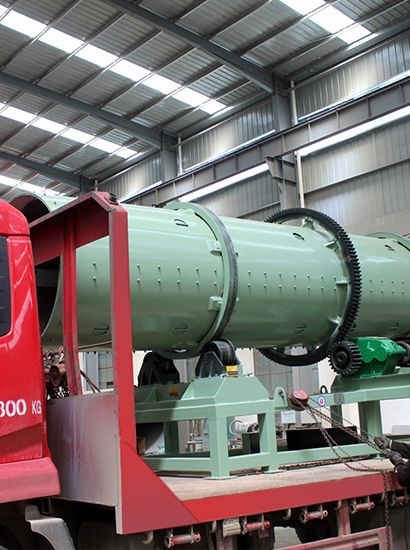
Double screws compost turners offer uniform turning and good oxygenation, making them widely used in organic fertilizer trough fermentation processes. They effectively shorten the fermentation cycle and are suitable for processing most conventional raw materials. However, this equipment is not a panacea, and its application has significant limitations in actual production.
Firstly, the equipment is limited by site conditions. Double screws compost turners are specialized trough-type equipment, only suitable for fixed fermentation troughs with standard specifications and regular layouts. They cannot be used for open-air composting or non-standard site operations. If the plant area is small or the fermentation trough size is not standard, the equipment cannot operate normally, resulting in poor overall flexibility.
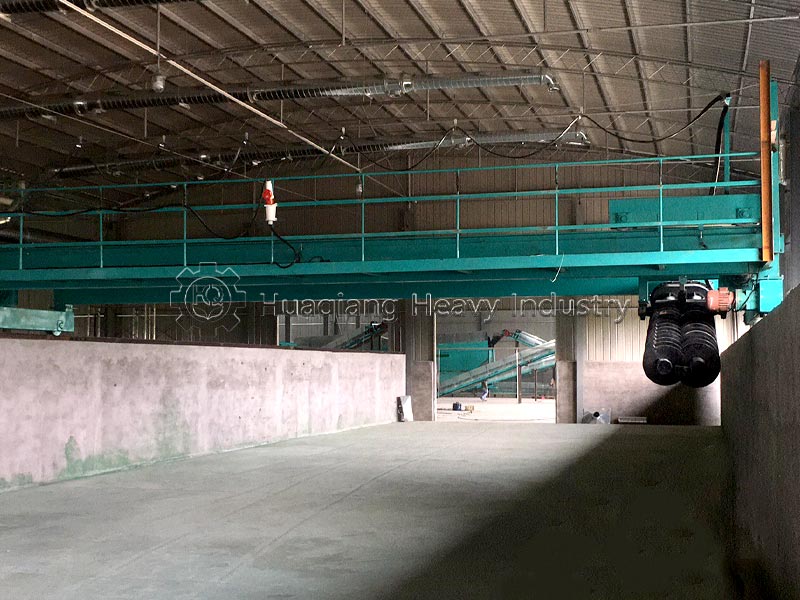
Secondly, there is a shortcoming in raw material compatibility. With high-moisture, high-viscosity pure livestock and poultry manure, the equipment’s spiral shaft is prone to material sticking and shaft entanglement, leading to incomplete turning and material stratification. For mixed raw materials with a high proportion of coarse fiber, such as straw and mushroom residue, the equipment’s turning penetration is insufficient, easily causing uneven oxygenation and inconsistent fermentation and decomposition levels.
In large-scale production scenarios, the equipment’s capacity limitations are more prominent. Compared to large wheel compost turning machines, the double screws compost turning machine has a smaller material volume per turn and a limited coverage area, making it unsuitable for large-tonnage production in ultra-wide and ultra-deep fermentation tanks. Its efficiency for continuous high-intensity operation is also low, making it difficult to meet the rapid fermentation and mass production needs of large fertilizer plants.
In summary, the double screws compost turning machine is more suitable for small and medium-sized plants, conventional raw materials, and standardized tank fermentation scenarios. It is not suitable for special raw materials, non-standard sites, or ultra-large-scale mass production.