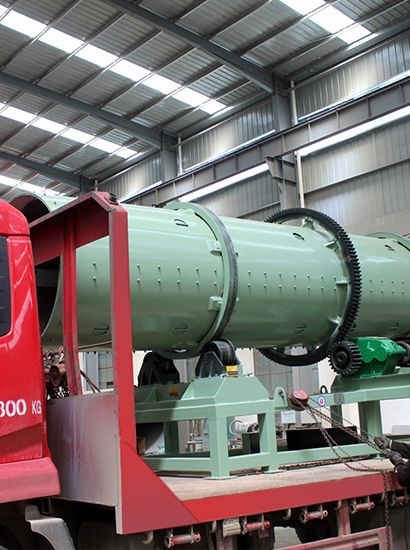
While both agricultural waste compost making machines and sludge compost fermentation machines fall under the category of organic material processing equipment, they are rarely used interchangeably. The materials differ vastly, necessitating diametrically opposed design philosophies.
For agricultural waste compost making machines, the primary challenge is fibrousness. Materials such as crop stalks, spent mushroom substrate, and rice husks are long-fibered, tough, and low-density; their fibers easily tangle around the cutter drum during operation. Consequently, these machines employ dual-shaft shearing drums that combine long and short blades to cut fibers before turning and throwing the material. They prioritize high-displacement mixing to forcibly blend carbon and nitrogen sources, while their drive systems are engineered to prevent slippage and idling.
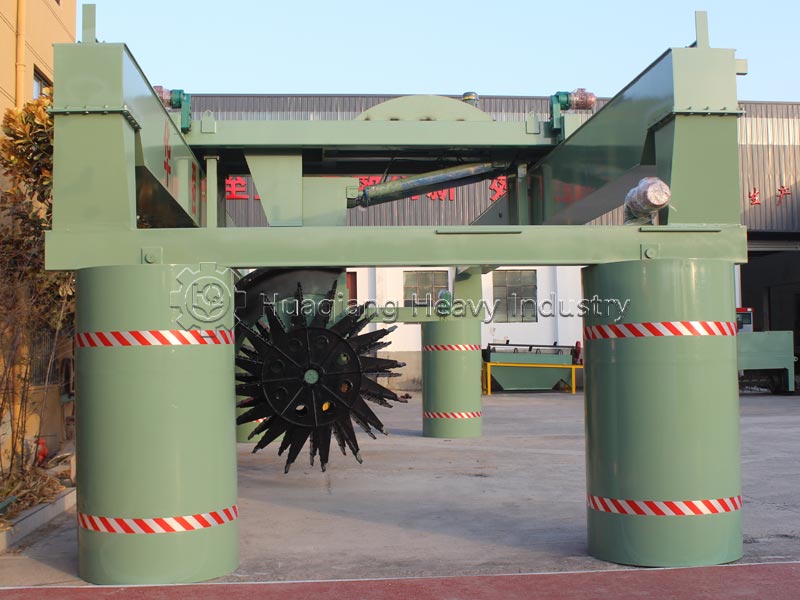
For sludge compost fermentation machines, the primary challenge is viscosity. Municipal sludge has a moisture content of 75%–85%, consists of extremely fine, highly sticky particles, and contains corrosive elements like sulfides and chloride ions. Design priorities center on anti-adhesion and corrosion resistance: self-cleaning drums, highly sealed bearings, and heavy-duty anti-corrosion chassis are essential. Furthermore, because sludge flocs are fragile—and excessive shearing destroys pore structure—the turning method favors low-speed pushing rather than high-speed cutting.
Process objectives also differ sharply. Agricultural waste turning focuses on mixing—adjusting the carbon-to-nitrogen ratio, moisture, and porosity to facilitate synergistic fermentation among diverse materials. Sludge turning focuses on control—regulating oxygen levels, temperature, and odor emissions to prevent anaerobic acidification and secondary pollution. The former seeks homogenization; the latter seeks stabilization.
Equipment selection criteria diverge accordingly: choose an agricultural waste compost making machine for fibrous, bulky materials requiring mixing and conditioning; choose a sludge compost fermentation machine for viscous, fine-textured materials containing corrosive components. Ultimately, it is not a matter of which machine is more advanced, but rather which is tailored to the specific material. Understanding the nature of the material is more important than simply comparing equipment specifications.