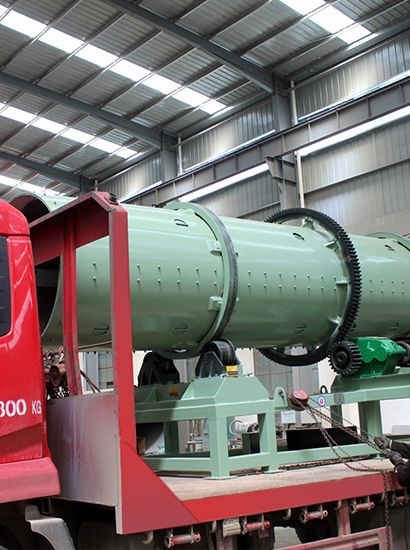
Simple trough and hydraulic trough compost turning machines once played pivotal roles in the evolution of organic fertilizer production equipment; today, however, they are rarely seen in new production lines, appearing only occasionally in older facilities.
The simple trough compost turning machine was an early “budget-friendly” option. It featured a gantry suspended over trough rails, with a cutter roller driven by a winch or chain; lacking a hydraulic system, its turning depth and speed were fixed by mechanical limits. While low in cost and easy to maintain, it suffered from non-adjustable depth, constant rotation speeds, a tendency for sticky or wet materials to clog the shaft, and the need for constant manual supervision—resulting in high labor intensity.
The hydraulic trough compost turning machine was once considered an upgrade. It utilized hydraulic motors for movement and cylinders to control the cutter roller’s height, allowing for stepless adjustment of depth and speed with less physical effort. However, hydraulic hose fittings were prone to aging and leaking in the humid, ammonia-rich environment; hydraulic fluid required regular replacement; repairs were costly and time-consuming; and the system was highly sensitive to fluid cleanliness.
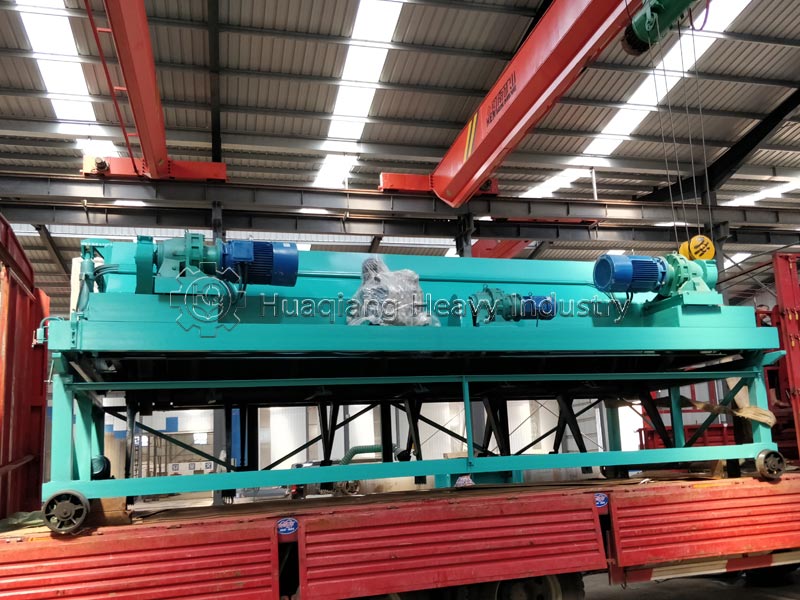
The fundamental reasons for their displacement are a lack of flexibility and durability. Their shared drawback was a reliance on fixed troughs and rails, making adjustments difficult once the production line was built. Modern organic fertilizer plants prefer self-propelled or crawler-type compost turners, which require no rails, offer greater mobility, and feature superior corrosion resistance. Amidst trends toward continuous, large-scale production, simple and hydraulic trough-type turners have receded into the background, appearing mostly in small, fixed-site operations or projects with extremely limited budgets.
They have not vanished, but they are no longer the mainstream choice. Reflecting on them reveals the evolutionary trajectory of composting equipment: a shift from merely “functional” to “user-friendly,” and from “fixed” to “flexible.”