
Contact Info

Powder Fertilizer Packing Machine

Powder fertilizer packing machines are widely used in the field of powder fertilizer packaging due to their precise metering, stable operation, and easy maintenance. The equipment fully considers the characteristics of powder fertilizer materials, such as easy dust generation, moisture absorption, and a certain degree of corrosiveness. The feeding screw and weighing components are made of wear-resistant and corrosion-resistant materials. The machine has good sealing performance, reducing dust intrusion into the equipment and extending the life of electrical components. Pneumatic components and sensors are selected from industrial-grade products, ensuring reliable long-term operation. For fertilizer production lines requiring continuous packaging for extended periods, powder fertilizer packing machines are a reliable packaging equipment.
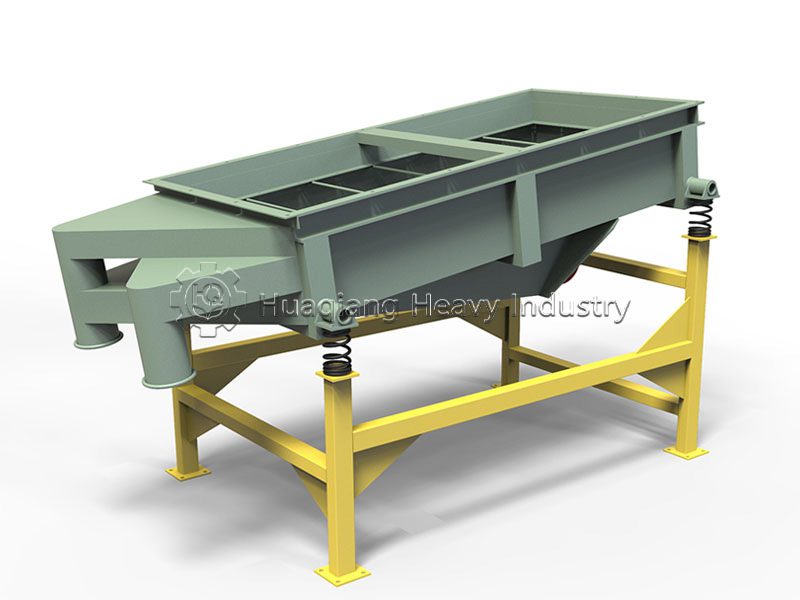
Vibration Screener Machine

Vibration screener machines are commonly used fine screening equipment in fertilizer production lines. They are simple to operate, easy to adjust, and perform excellently in particle grading and dust removal. They use vibration to make the material bounce and move forward on the screen surface, thoroughly separating fine powder and broken particles, resulting in clean and uniform finished particles. The equipment is highly automated and requires no dedicated personnel for supervision after interlocking with upstream and downstream conveyor equipment. Screen replacement is quick, and daily maintenance mainly involves checking and tightening the vibration motor bolts. For fertilizer companies with high requirements for the appearance and particle size of the finished product, vibration screener machines are practical and efficient fine screening equipment in the screening section.

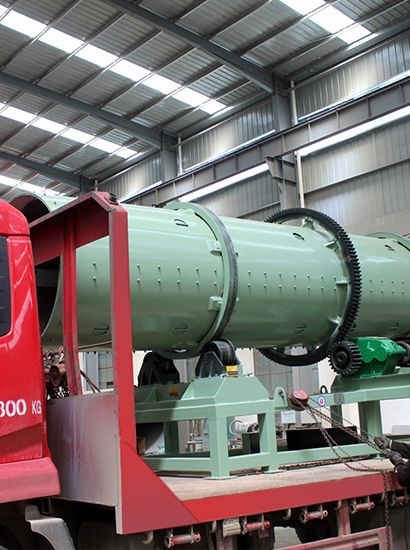
Rotary Screener Machine

The rotary screening machine is specialized equipment used in the fertilizer industry to classify granular materials based on particle size. It utilizes a rotating cylindrical screen drum to tumble and move the material inside; particles smaller than the screen apertures pass through to become the undersized product, while materials larger than the apertures move forward along the drum and are discharged from the end, thereby effectively separating materials of different sizes. In organic and compound fertilizer production lines, the rotary screening machine is typically positioned after the granulation, drying, and cooling stages to separate finished granules from fine powder and oversized particles, ensuring uniform particle size in the final product. Featuring a simple structure, high screening efficiency, and stable operation, it serves as a crucial piece of equipment for quality control in fertilizer production.

Screw Conveyor

The screw conveyor is a common piece of equipment in the fertilizer industry used to transport powdered, granular, and small-lump materials. It utilizes rotating spiral blades to push material forward along a trough or pipe. It is widely used in organic and compound fertilizer production lines for transferring raw materials, semi-finished products, and finished goods. Featuring a simple structure and excellent sealing capabilities, it effectively prevents dust emissions and material spillage, making it an economical and practical solution for enclosed conveying and improving workshop environments.

Large Angle Belt Conveyor

Large angle belt conveyors play a critical role in vertically lifting materials within fertilizer production lines, serving as essential equipment for achieving three-dimensional workshop layouts and efficient space utilization. In fertilizer production, equipment for processes such as crushing, mixing, and granulating is often arranged on platforms at varying heights; large angle belt conveyors establish a continuous material transport path between the ground level and these elevated platforms. By integrating horizontal transport and vertical lifting onto a single belt, they simplify transfer steps and reduce the total number of machines required, acting as a vital link in the material flow of modern fertilizer production lines.

Mobile Belt Conveyor

Mobile belt conveyors are commonly used flexible loading and unloading tools in fertilizer production lines and warehouses. They are simple to operate, easy to relocate, and can be pushed by a single person. Whether loading finished fertilizer onto trucks or transferring raw materials from the stockpile to the feeding port, the mobile belt conveyor can quickly take position and start working as soon as it is connected to a power source. The machine height is adjustable, allowing loading from both high and low trucks. The equipment has no complex control system; operators only need to master start-up, shutdown, and height adjustment. Daily maintenance is also simple, making it a practical piece of equipment for fertilizer companies to solve temporary conveying tasks.

Bucket Elevator

Bucket elevators play a crucial role in the vertical material transport of modern fertilizer production lines, serving as core equipment for achieving three-dimensional layout and efficient space utilization in the workshop. In fertilizer production, various process equipment are often arranged on platforms at different heights. Bucket elevators, within a sealed casing, vertically lift materials from the ground or lower levels to higher levels, supplying materials to high-level equipment such as granulators, coolers, screening machines, and packaging machines. Together with horizontal belt conveyors and inclined belt conveyors with large angles, they form a three-dimensional conveying network for fertilizer production lines, making them indispensable material lifting equipment for fertilizer enterprises with capacities exceeding 10,000 tons to achieve fully automated production.

Belt Conveyor

Belt conveyors are the most widely used continuous conveying equipment in the fertilizer industry. The conveyor belt serves as both the traction and load-bearing mechanism, continuously transporting materials from one point to another. They are widely used in organic fertilizer and compound fertilizer production lines, connecting various processes such as crushing, mixing, granulation, drying, cooling, screening, and packaging, enabling long-distance, high-volume transport of powdery, granular, and small lump materials. The equipment has a mature structure, stable and reliable operation, and is easy to maintain. Horizontal, inclined, or convex/concave conveyor lines can be flexibly arranged according to the workshop layout, making it an indispensable basic equipment for fertilizer enterprises to achieve mechanized and automated production.

Large Wheel Compost Turning Machine

The large wheel compost turning machine is a fermentation turning machine that utilizes a rotating disc as its core component; it is primarily used to turn, break up, and displace piled materials during the aerobic fermentation process of organic fertilizer. Unlike trough-type turners that operate by spanning across fermentation troughs, this machine employs one or two large rotating discs that cut into the material pile. Turning teeth mounted on the discs scoop up the material and cast it backward. Driven by a travel mechanism, the machine advances along the length of the pile, simultaneously turning and displacing the material in a single pass. It is highly adaptable to various fermentation facilities, suitable for both trough-based fermentation and ground-based windrow composting. Featuring a compact structure, deep turning capability, and high processing efficiency, it is ideal for the aerobic fermentation of livestock manure, crop stalks, and other organic wastes, making it a popular choice for small- to medium-scale composting projects.

Chain Compost Turning Machine

The chain compost turning machine is a specialized piece of equipment used in trough-type aerobic fermentation processes, employing a chain-driven scraper for deep turning of the compost. Its core working principle involves a circular chain driving multiple sets of transverse scrapers to circulate within the material layer, scooping up the entire layer of material from the bottom of the trough and turning it backward. This scraper-type turning action is gentle and orderly, resulting in distinct layers and neat displacement of the material after turning, unlike high-speed toothed rollers which scatter the material everywhere. The equipment has a simple and transparent structure; the chain and scrapers are the main working components, making daily maintenance readily apparent, allowing operators to perform all maintenance themselves. For trough composting projects that prioritize robust and durable equipment and want to minimize maintenance effort, the chain compost turning machine offers a practical turning solution with low operating barriers and low maintenance costs.