
Contact Info

Windrow Compost Turning Machine

The windrow compost turning machine is a mature and widely used self-propelled piece of equipment for organic fertilizer windrow composting. Powered by a diesel engine and utilizing a crawler undercarriage combined with a transverse turning drum, it straddles the windrow to complete the turning process in a single pass. Its self-powered nature—requiring no external power supply—makes it particularly suitable for use in open fields far from power infrastructure and at temporary composting sites. In projects such as manure treatment at small-to-medium-sized livestock farms, township-level organic fertilizer processing, and centralized agricultural waste composting, the windrow compost turning machine has become the primary turning equipment for aerobic windrow fermentation processes, thanks to its site adaptability, high operational efficiency, and ease of operation and maintenance.
Double Screws Compost Turning Machine

The double screws compost turning machine is a type of trough-style fermentation turning equipment that utilizes two parallel screw shafts as its core turning components. Unlike simple trough turners that rely on rotating toothed rollers, the twin-screw turner employs two shafts equipped with continuous helical blades to turn and advance the material. The two screw shafts rotate either in the same or opposite directions, scooping up material from the bottom of the trough along the helical surfaces, turning it over, and pushing it toward the discharge end—thereby accomplishing both turning and displacement in a single pass. The screw structure exerts stronger cutting and mixing forces on the material, effectively breaking up clumps and shredding long fibers, which results in greater fermentation uniformity. The equipment travels back and forth along rails mounted on the fermentation trough; the turning depth and travel speed are adjustable, making it suitable for processing organic materials with high moisture content that are prone to clumping. Characterized by high processing efficiency and stable operation, the double screws compost turning machine is a technologically mature and widely used model in trough-style aerobic fermentation processes.

Hydraulic Compost Turning Machine

The hydraulic compost turner is the core turning equipment for the aerobic fermentation stage in industrial fertilizer production lines. Designed for large-scale, continuous production, it replaces traditional mechanical direct-drive structures with a fully hydraulic transmission system, enabling flexible control over turning depth, travel speed, and load protection. The machine integrates with the production line’s master control system to synchronize with production pacing. While retaining the advantages of high space utilization and a stable decomposition environment inherent to channel-type fermentation, it significantly enhances automation and operational reliability, making it a preferred choice for upgrading modern fertilizer production lines.

Simple Compost Turning Machine

The simple trough-type turner is a core piece of equipment in the aerobic fermentation process for organic fertilizer. It is responsible for periodically turning, aerating, and shifting the organic materials piled within the fermentation trough. Mounted on rails running along both sides of the trough, the machine travels back and forth; its high-speed rotating tined roller scoops material from the bottom, breaks it up, and throws it backward, causing the material to shift toward the rear as it resettles. A single unit can serve multiple parallel troughs, switching flexibly between them via a transfer carriage, thereby ensuring high equipment utilization. Featuring a compact structure, reliable drive system, and ease of operation and maintenance, this equipment is available in models ranging from capacities of a few tons to over a hundred tons per day. It is a practical choice for small-to-medium-scale composting projects seeking to control fermentation quality and shorten the maturation cycle.

Coating Machine

The fertilizer coating machine is a critical piece of post-processing equipment in granular fertilizer production lines, situated between the screening and packaging stages. It applies a protective coating to the finished granules. Although granular fertilizers meet factory standards after drying, cooling, and screening, they remain susceptible to caking, moisture absorption, and dust formation during storage and transport. By forming a protective layer on the granule surface, the coating machine effectively blocks moisture and air, reduces inter-granule adhesion, and enhances the product’s appearance—making the granules glossier and smoother. This process is essential for increasing the fertilizer’s commercial value and market competitiveness.

Drum Fertilizer Cooler

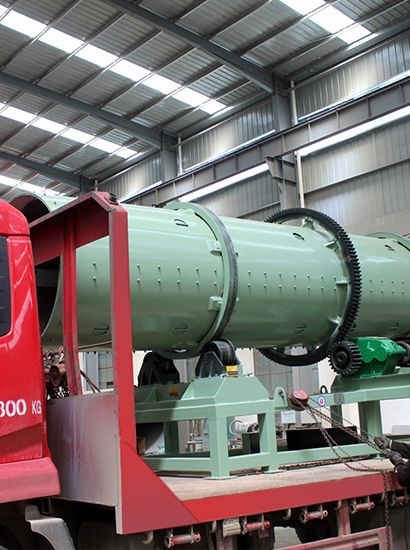
Drum fertilizer coolers are widely used in granular fertilizer production due to their high cooling efficiency and low energy consumption. The internal lifting flights (lifters) are optimized to ensure uniform material dispersion and a dense material curtain, facilitating thorough heat exchange with the cooling air. Airflow and drum rotation speed can be flexibly adjusted based on material characteristics, minimizing energy consumption while ensuring effective cooling. The equipment features a robust, durable design with few wear parts and simple maintenance, making it suitable for continuous cooling operations across various fertilizer production lines.

Drum Fertilizer Dryer

The drum fertilizer dryer is a critical piece of process equipment in fertilizer production lines, used to control the moisture content of the finished product. Granulated fertilizer typically has a moisture content of 15%–30% and must be dried to below safe moisture standards before packaging and storage. By controlling inlet air temperature, airflow, and material residence time, the dryer precisely reduces granule moisture to the target range while enhancing granule hardness and strength, making it essential for ensuring the quality of the finished fertilizer.

BB Fertilizer Mixer

The BB fertilizer mixer is a core mixing device in a blended fertilizer production line, used to physically mix granular base fertilizers such as urea, ammonium phosphate, and potash fertilizer according to the formula ratio. Unlike organic fertilizer mixing equipment, the BB fertilizer mixer prioritizes maintaining particle integrity, avoiding particle breakage during the mixing process. The equipment offers flexible drum volumes, ranging from several hundred liters to several cubic meters, to meet the needs of different BB fertilizer production scales.

Double Axis Mixer

The double shaft paddle mixer is a piece of equipment that utilizes two horizontal shafts to drive rotating paddles for material mixing; it is widely used in the production of organic and compound fertilizers to rapidly and uniformly blend various raw materials. Through the staggered arrangement of paddles on the two shafts, the machine subjects materials to intense convective and shear mixing, achieving high uniformity in a very short time. Featuring high processing capacity and rapid mixing speeds, it is a highly efficient component of the ingredient mixing stage in organic and compound fertilizer production lines.

Vertical Disc Mixer

The vertical disc mixer is a material mixing device characterized by simple operation and excellent mixing performance; it is responsible for the uniform blending of ingredients in organic fertilizer workshops. Its open-pan design allows operators to clearly monitor the mixing process, making both material loading and visual inspection convenient. The equipment features a compact structure with a small footprint, making it suitable for installation in space-constrained workshops. Daily operation primarily involves controlling feed quantity, mixing duration, and discharge timing, allowing workers to master the process quickly.