Contact Info

Horizontal Mixer

Horizontal mixer is a material mixing equipment widely used in industries such as chemical, pharmaceutical, food, building materials, etc. Its main feature is that the mixing container is horizontally arranged, which can effectively handle the mixing of large capacity, high viscosity or materials containing solid particles, especially suitable for mixing operations that require long-term mixing or high uniformity.

Straw Crusher

Straw crusher is a mechanical equipment specifically designed for processing agricultural waste such as straw, wheat straw, corn stover, etc. It can crush these long and difficult to process straw materials into small pieces or fine particles for further utilization, such as as as raw materials for animal feed, organic fertilizers, biomass fuels, or for industrial purposes such as papermaking and sheet manufacturing.

Cage Crusher

Cage crusher, also known as cage crusher or cage crusher, is an efficient crushing equipment widely used in industries such as coal, chemical, building materials, metallurgy, etc. Especially in coal processing, it is used to crush large coal blocks into particle sizes suitable for further processing or use. Its unique design can handle materials with high hardness and humidity, while maintaining high crushing efficiency and low energy consumption.

Half-Wet Material Crusher

A semi wet material crusher is a device specifically designed to crush materials containing a certain degree of humidity, widely used in industries such as agriculture, food, chemical, and environmental protection, such as crushing wet straw, organic fertilizers, wet garbage, etc. This type of crusher can effectively process materials with high moisture content, avoiding the problems of clogging and low efficiency of traditional dry crushers when processing wet materials.

Chain Crusher

Chain crusher is an efficient crushing equipment mainly used for crushing medium to hard materials, such as coal blocks, limestone, shale, fertilizer raw materials, etc. It is particularly suitable for material pretreatment in industries such as agriculture, chemical industry, and building materials. It uses high-speed rotating chains and hammers to impact, shear, and grind materials, achieving efficient crushing of materials.

Double Roller Press Granulator

As an important granulation equipment, the double roller granulator utilizes a non-drying, room-temperature process, which offers significant advantages in energy conservation and improved production efficiency. Its core operating principle is to force a properly proportioned mixture through a feed mechanism into the gap between a pair of equal-sized, rotating extrusion rollers.

Under the powerful extrusion pressure, air inside the material is expelled, the distance between particles is reduced, and the intermolecular forces are strengthened, resulting in the material being squeezed into dense sheets or strips. As the rollers continue to rotate, the pressure on the material exhibits a specific pattern: reaching its maximum value when the line connecting the two roller radii is horizontal, typically reaching several MPa or even higher, and then rapidly decreasing.

At this point, the formed material recovers due to its own elasticity, breaking free from the contact with the roller surface under the action of the rebound force, and smoothly falls to the next process.This granulation method fundamentally avoids the energy-intensive drying process required in traditional wet granulation. Calculated energy consumption is only 30%-50% of that of traditional wet granulation, significantly reducing energy consumption and production costs.

Furthermore, the entire production process produces no wastewater, exhaust gas, or waste residue, fully complying with national environmental protection standards. This is a truly energy-saving and environmentally friendly granulation process.

Disc Granulator

The disc granulator is a widely used pelletizing machine. Its unique structure and operating principle make it a crucial tool in a variety of applications. The disc’s rotation forces the material inside the disc under the combined effects of centrifugal force, friction, and gravity, gradually rolling it into balls. This transforms powdery or lumpy materials into granules.

The disc granulator is mainly composed of a disc, a transmission device, a frame, a feeding device, a water spray device, etc. Its core working component is a tilted disc, the tilt angle and speed of which can be adjusted according to the characteristics of different materials and granulation requirements.

Once the material enters the disc, it continuously slides and tumbles along its bottom as the disc rotates. Simultaneously, a water sprayer applies an appropriate amount of water or binder to the material, moistening the surface of the particles. Friction and centrifugal force gradually bind the small particles together, forming larger ones. As the particles grow larger, when their gravity exceeds the centrifugal force, they are ejected from the edge of the disc, completing the granulation process.

The disc granulator has the characteristics of simple structure, easy operation and low energy consumption. Compared with other granulation equipment, it has a strong adaptability to materials and can process a variety of materials with different properties. The granules produced have good sphericity, high strength and stable and reliable quality.

Flat Die Pelleting Machine

The flat die granulator is a device that granulates materials through mechanical extrusion. It uses a room-temperature granulation process and is widely used in the field of pellet forming. Its core working principle is to convey pre-treated material between a flat die and a pressure wheel. The pressure wheel, driven by power, applies pressure to the material, forcing it through the die holes in the flat die to form columnar pellets. The pellets are then cut into pellets of a set length.

This granulation method eliminates the need for high-temperature drying, maximizing the retention of active ingredients in the material and making it particularly suitable for granulating heat-sensitive materials. Compared to traditional granulation equipment, it offers a simpler and more compact structure, easier operation, and lower energy consumption. The production capacity of a single unit can be adjusted based on demand, ranging from tens of kilograms to several tons per hour, meeting the needs of production at various scales.

Ring Die Pelleting Machine

The ring die granulator is a widely used pelletizing machine. It utilizes a mechanical extrusion granulation process and holds a significant position in the pellet production market due to its high efficiency and stable performance. Its core operating principle is to feed pre-treated material between a ring die and a pressure roller. The pressure roller rotates under power, exerting a force on the material, forcing it through the die holes in the ring die to form columnar pellets. This is then cut into pellets of a predetermined length by a cutting device.

This granulation method eliminates the need for complex drying processes and effectively preserves the nutrients and active ingredients in the material while ensuring pellet quality. Compared to other granulation equipment, the ring die granulator offers high production efficiency, with a single machine output of several to tens of tons. The pellets produced are dense and strong, making them suitable for large-scale industrial production.

Rotary Drum Granulator

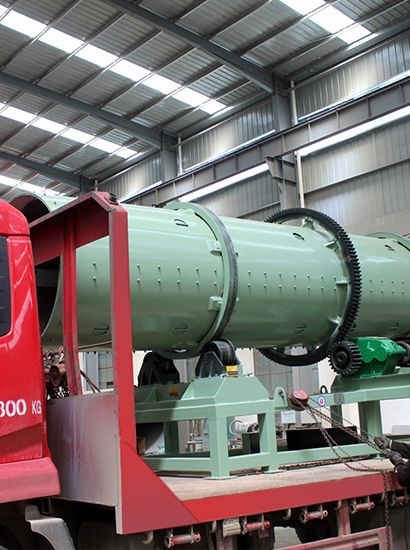
A rotary drum granulator is a granulation device that uses the rotation of a drum to aggregate materials into granules. It is widely used in the field of granule production. Its core operating principle is that the mixed material is fed into an inclined drum. Driven by a motor, the drum rotates, causing the material to tumble and collide within the drum due to the combined effects of gravity, friction, and centrifugal force . Simultaneously, a spray device applies an appropriate amount of water or binder to the material, moistening the surface of the material particles and bonding them together, gradually agglomerating them into granules of a certain strength and size.

This granulation method is a wet granulation method suitable for a wide variety of materials, producing granules with good sphericity and moderate strength. Compared to other granulation equipment, the rotary drum granulator has a high production capacity, enabling continuous large-scale production. Its simple structure and easy operation and maintenance make it a key player in the fertilizer and chemical industries.